

Biggest news for us – and the first thing to truly bore you – after last month’s detailing or our failing freezer unit, we got our new refrigerator installed and the dying one removed. Utter relief. Yeah, not earth- shattering but a treat for us to not have our packages frozen solid to the bottom of the freezer. Had to throw this tidbit in. And had to boast with a picture. So sue me.
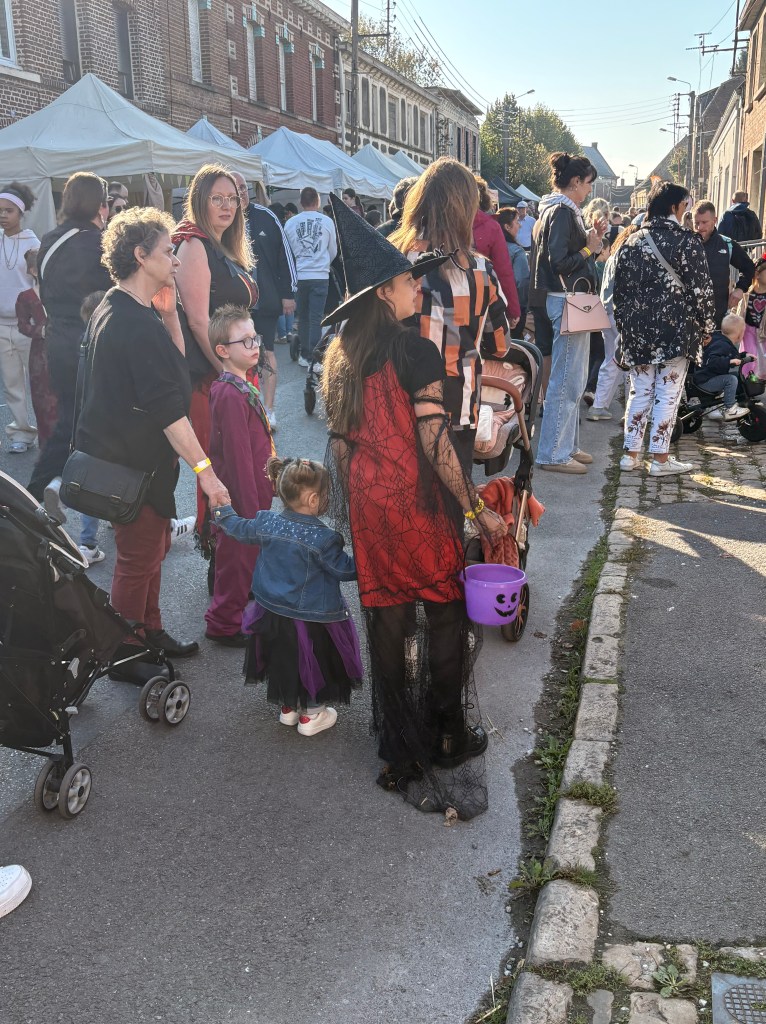
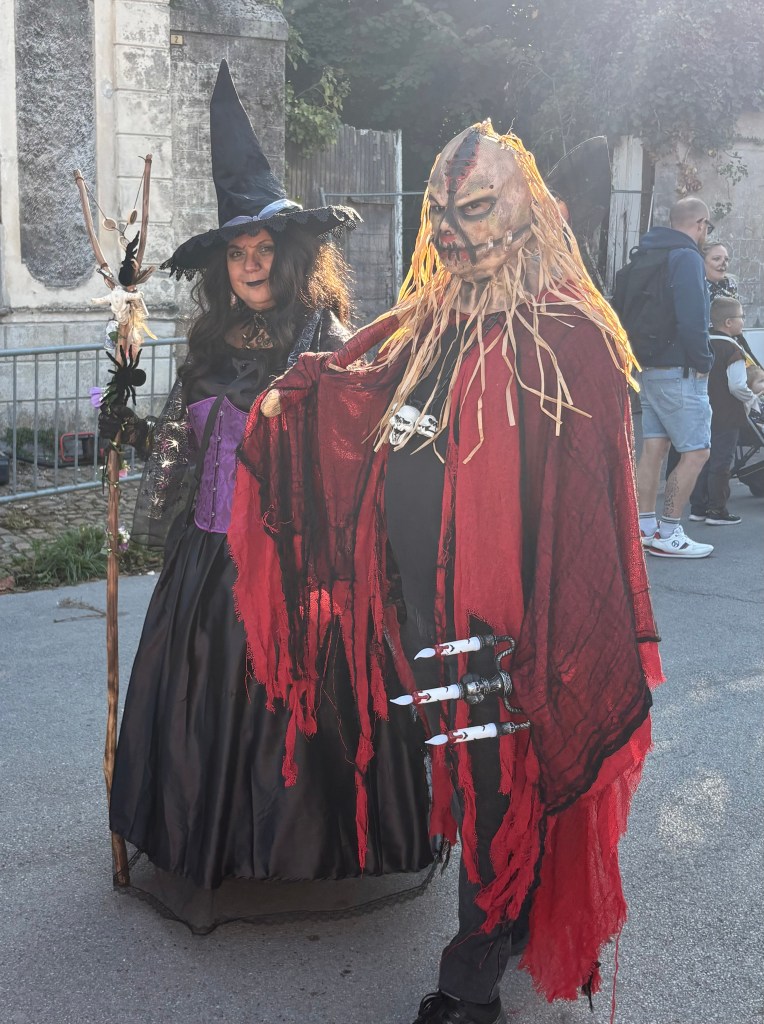
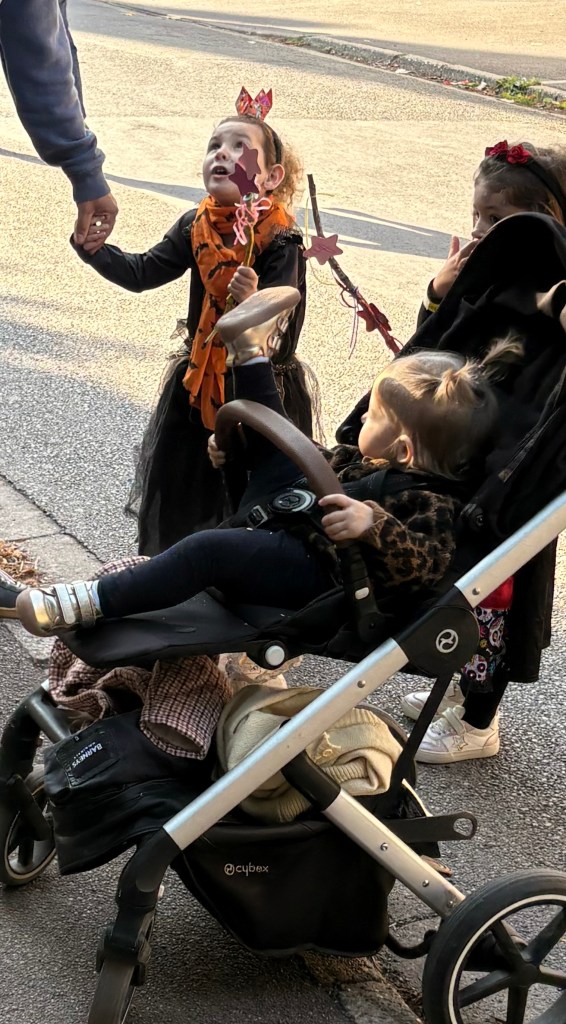
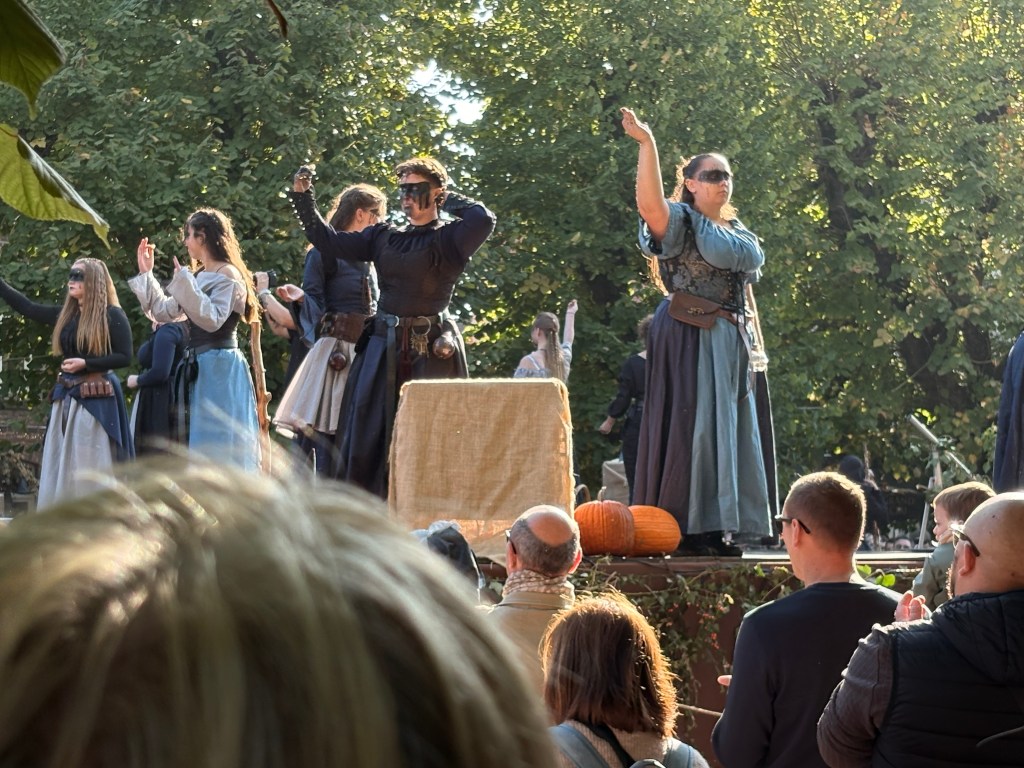
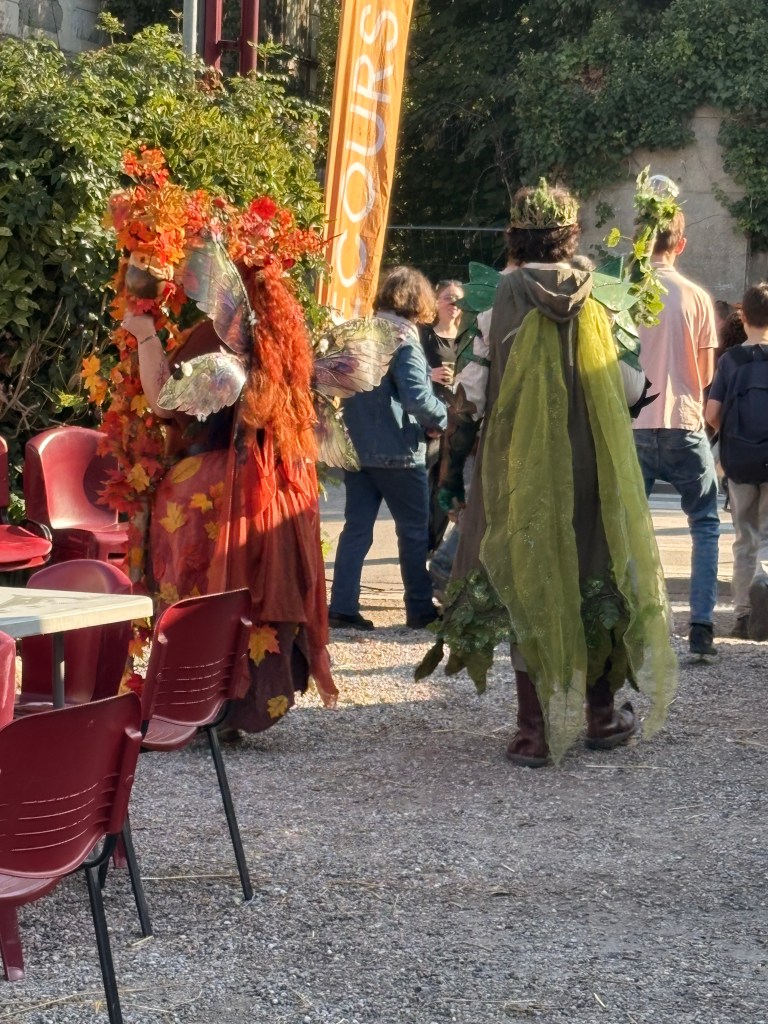
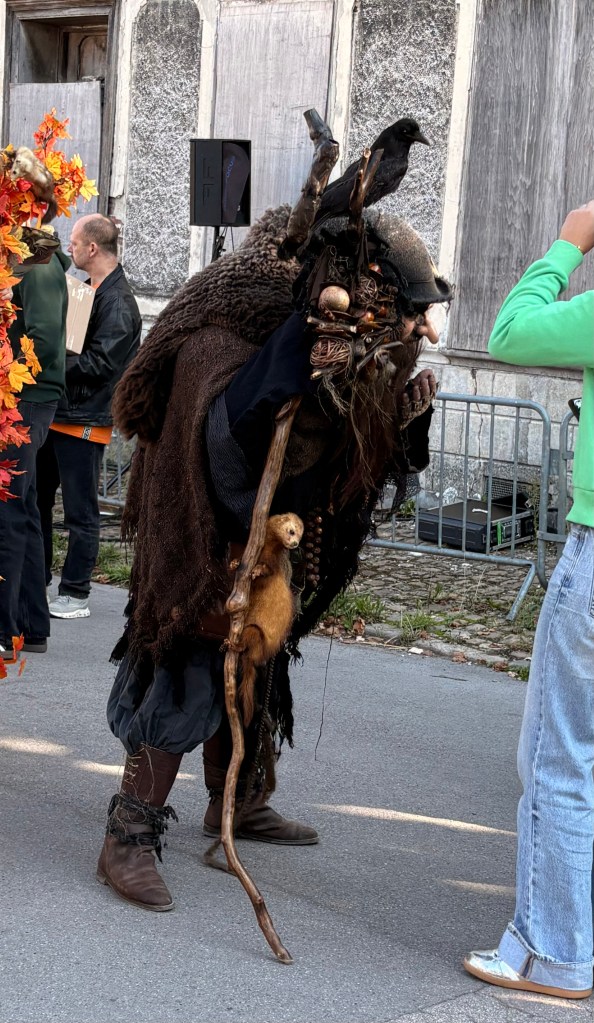
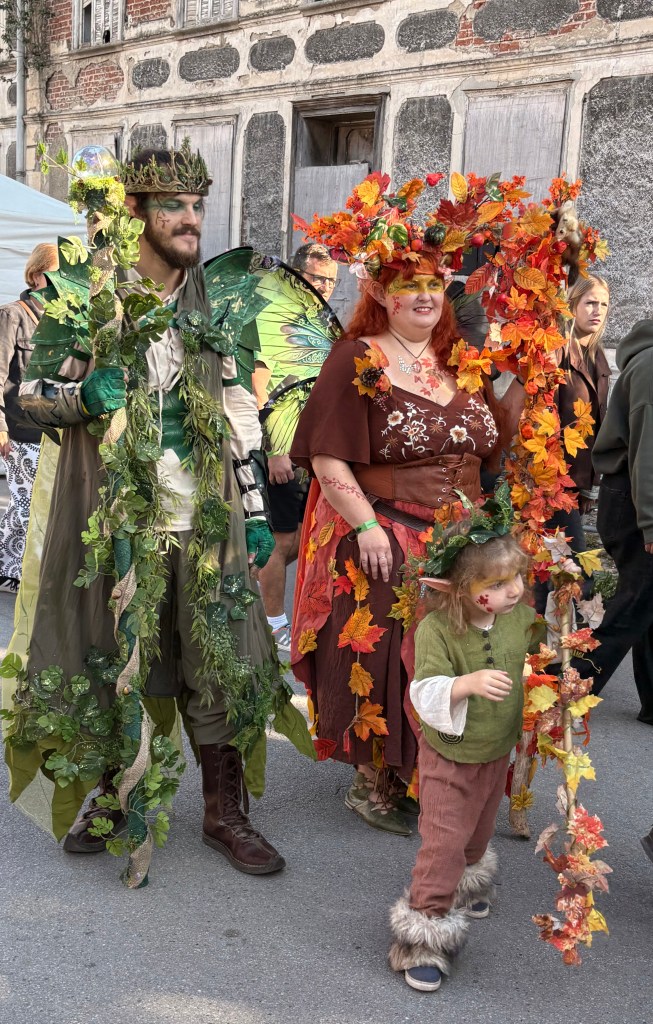
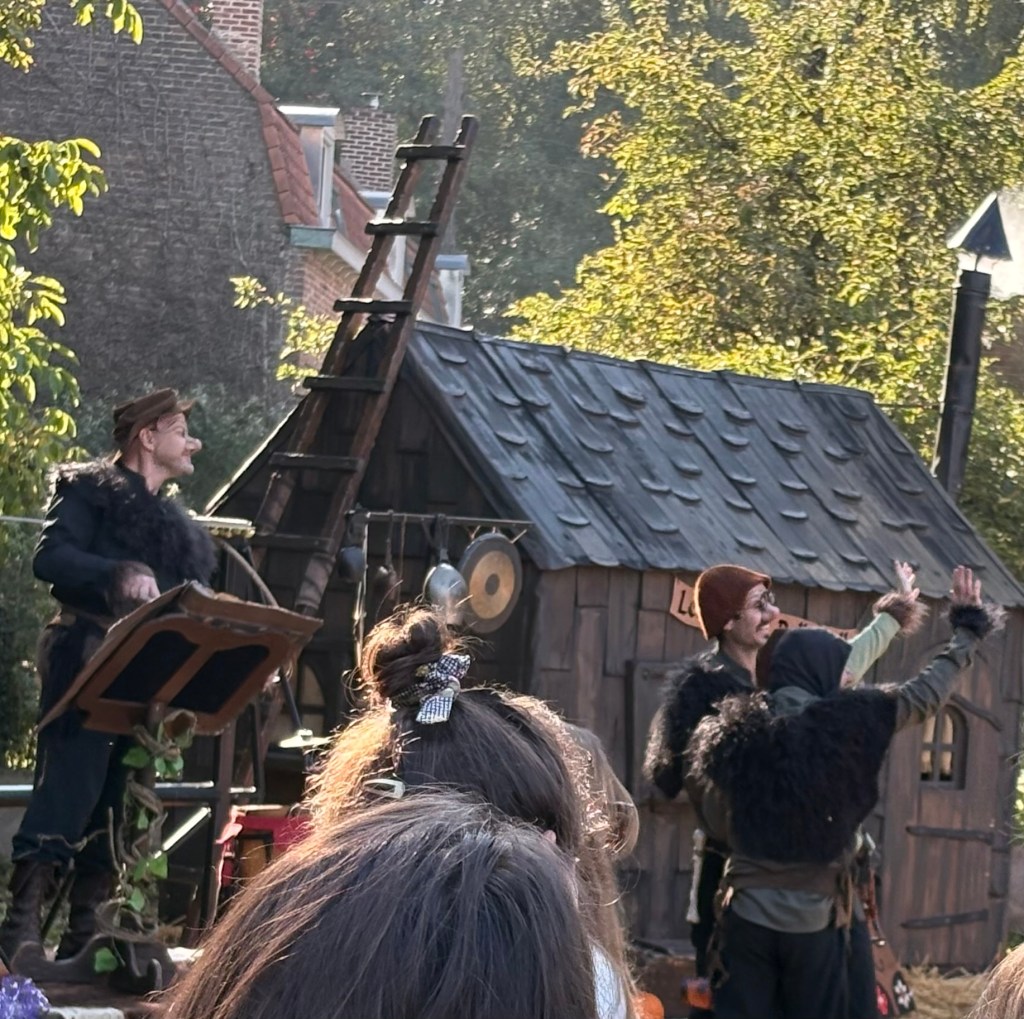
Now as we’ve lamented in the past, France does not embrace Halloween like the US or the UK do and it’s something that we truly miss. So, we were thrilled to see a posting on Instagram about an area south of Lille – Marchiennes – which celebrates it, dedicating a whole area on the edge of town and of course we went. Seemed early for the celebration but we’d take what we could get. To reach the area we would have to first take a metro, then get on a bus and the travel time was a total of an hour and a half. That seemed extreme and we opted for a 30-minute Uber ride instead. Walking into the entrance, it reminded us of the Renaissance Festival in its infancy with different stage performances throughout the day, food vendors, craft booths and wandering costumed characters.
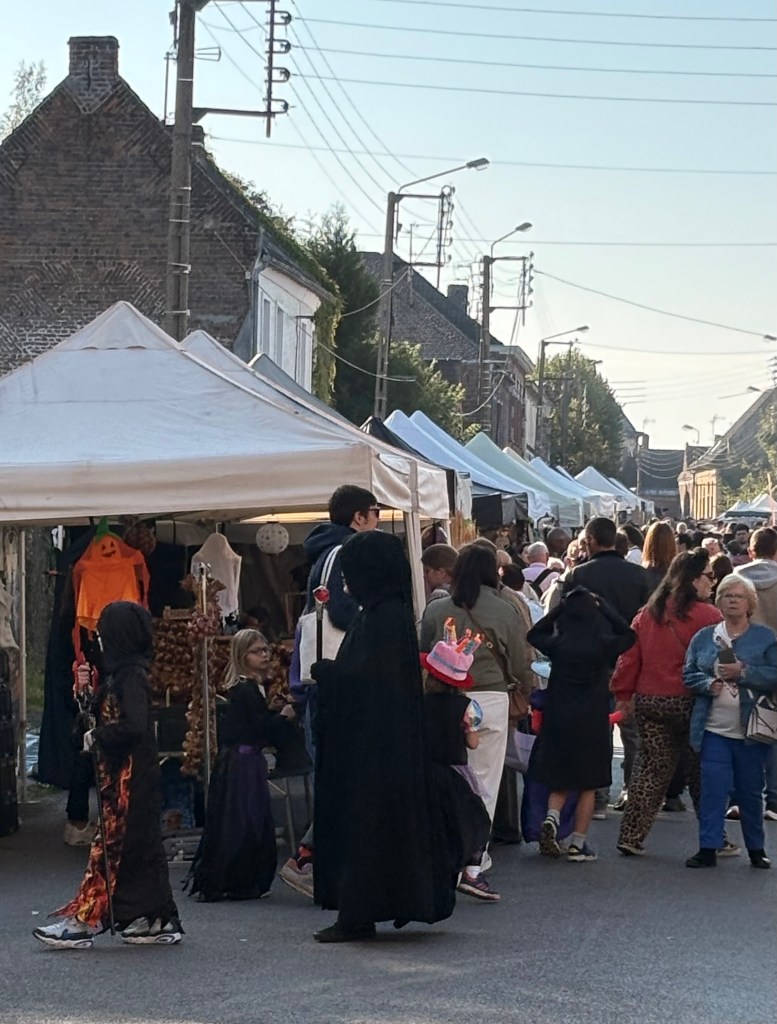


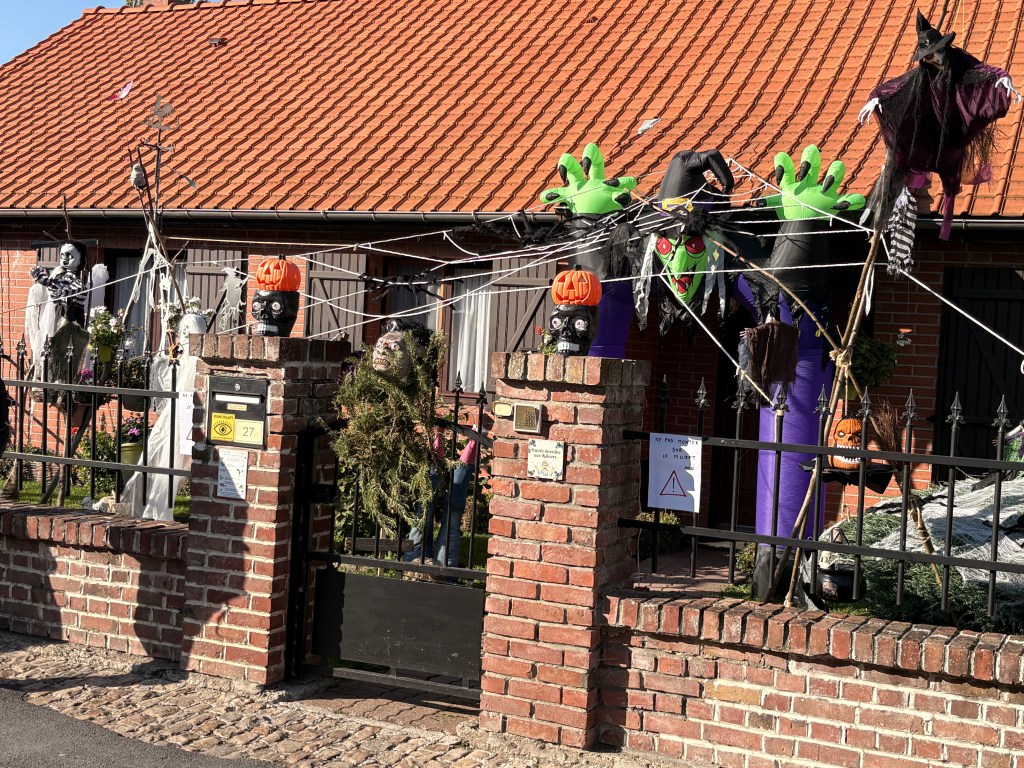
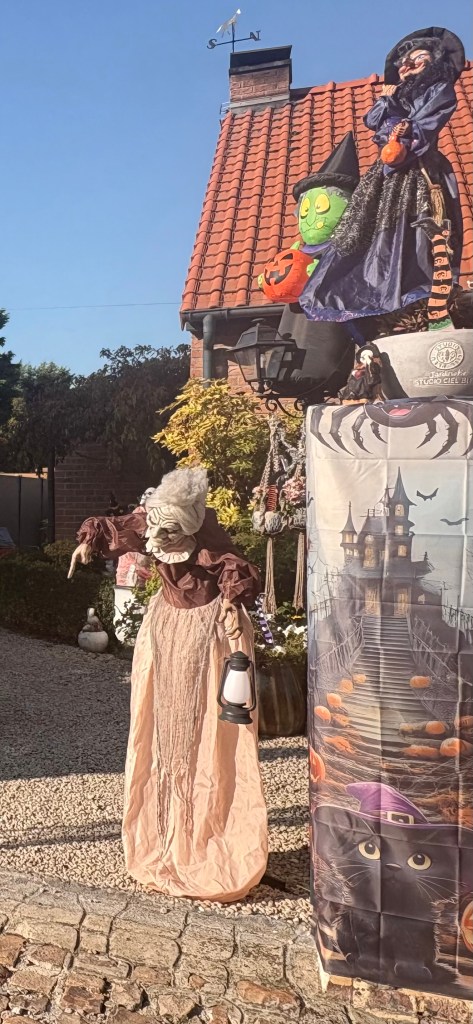
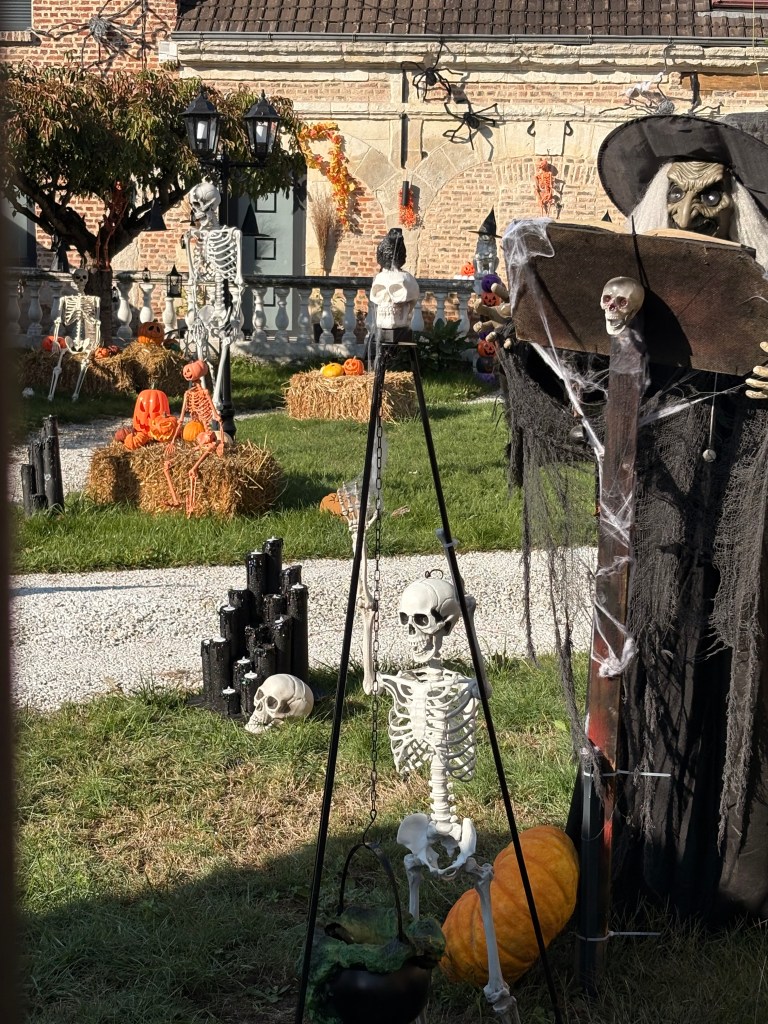
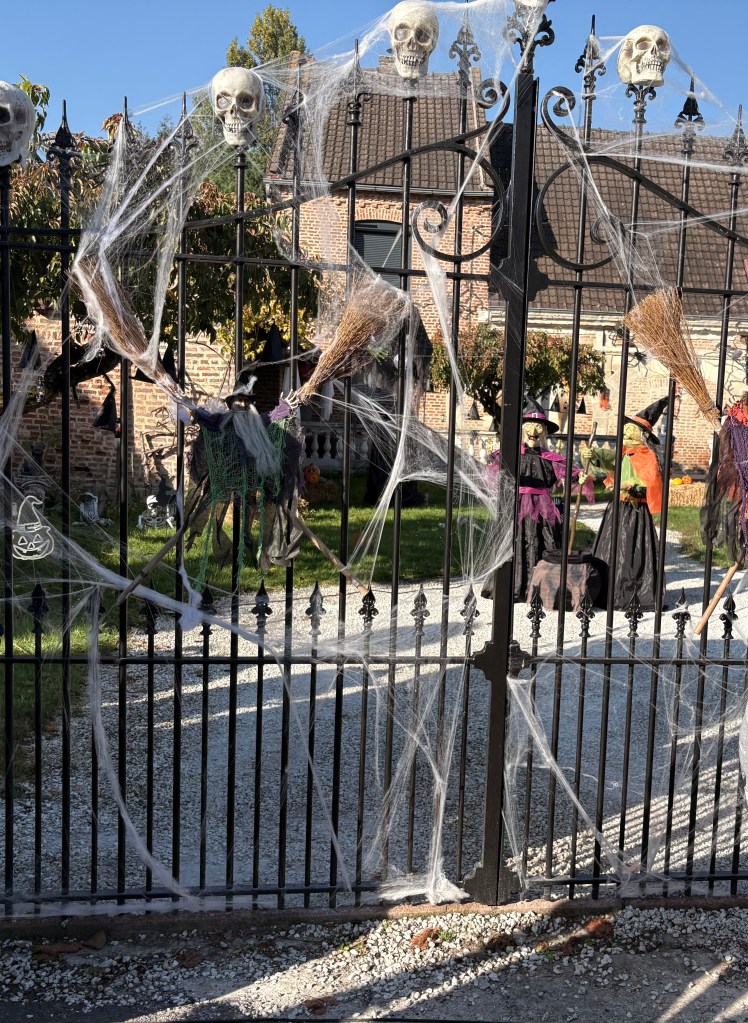
It was a thrill to see houses thoroughly decorated and kids running around in costumes – which just doesn’t happen here. We wandered through all the pathways, tasted some treats, had a beer, watched a few shows, which were all in French – rather lost on us but it was all great fun. We returned to Lille, happy to have made the trip but overall decided it was really too far away for us to make it a regular event, which is a shame. Maybe someday Halloween will catch on for the French. We really miss seeing kids run around in costumes.

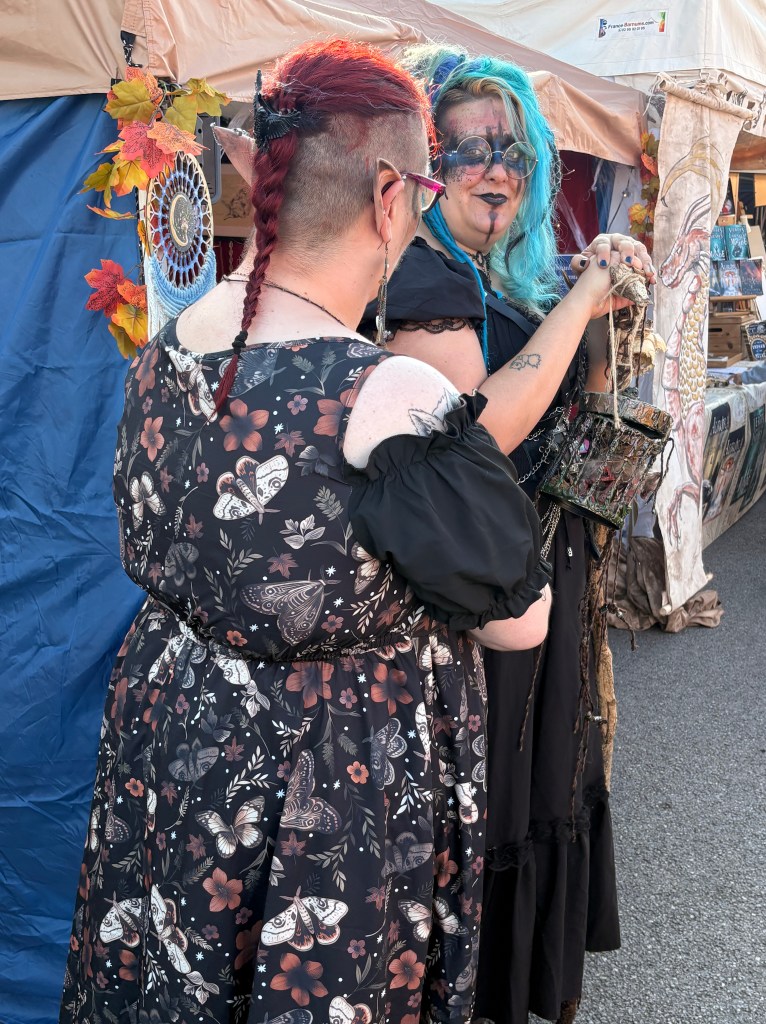

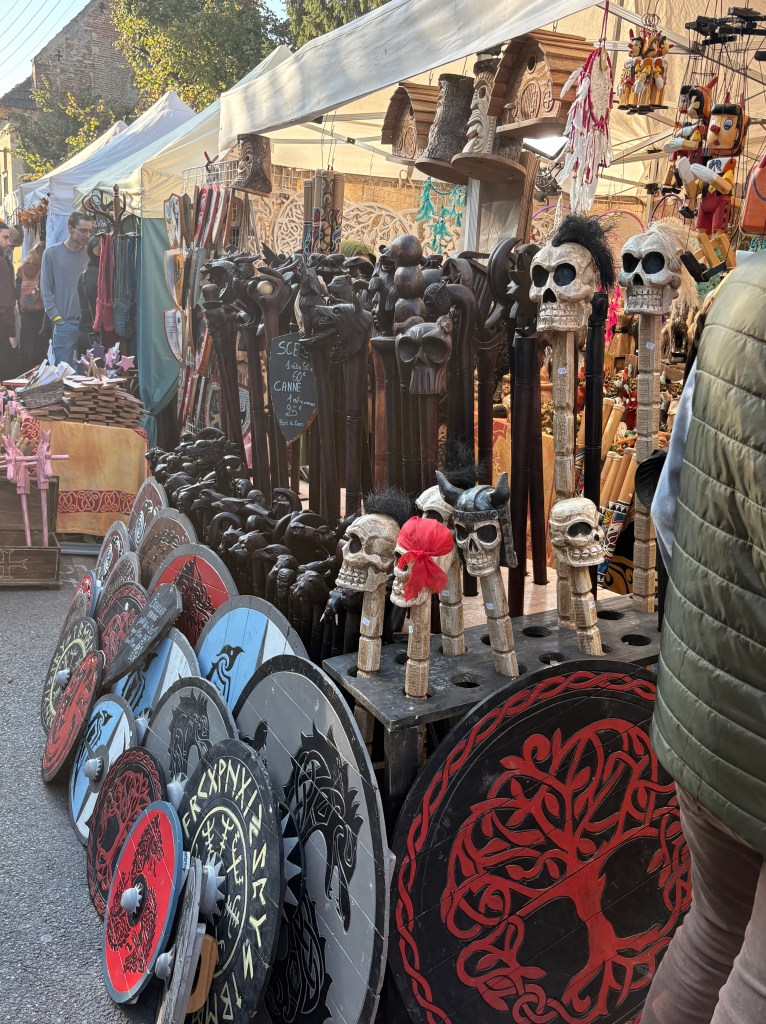
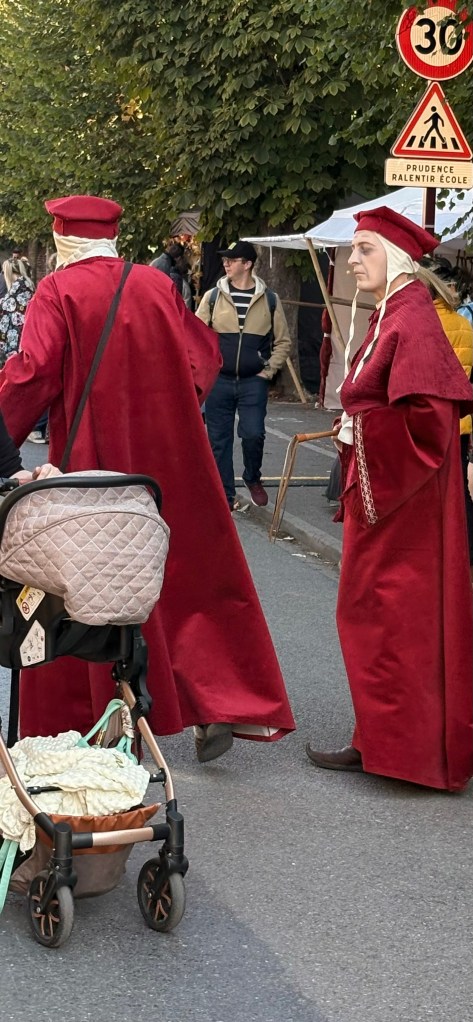
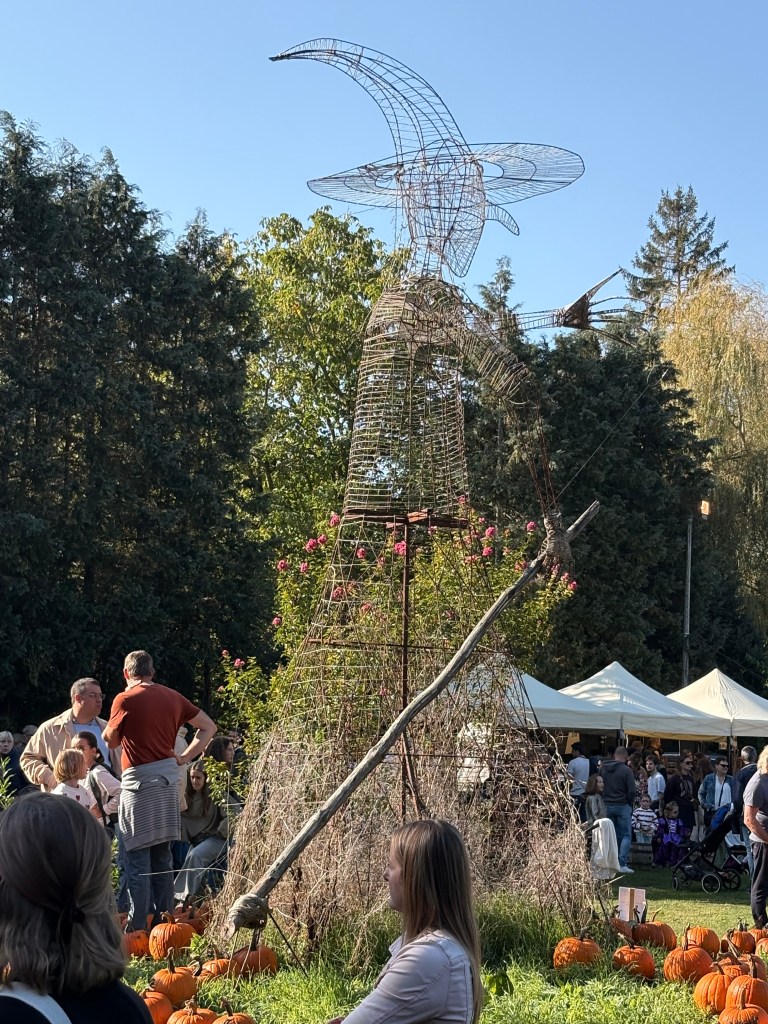
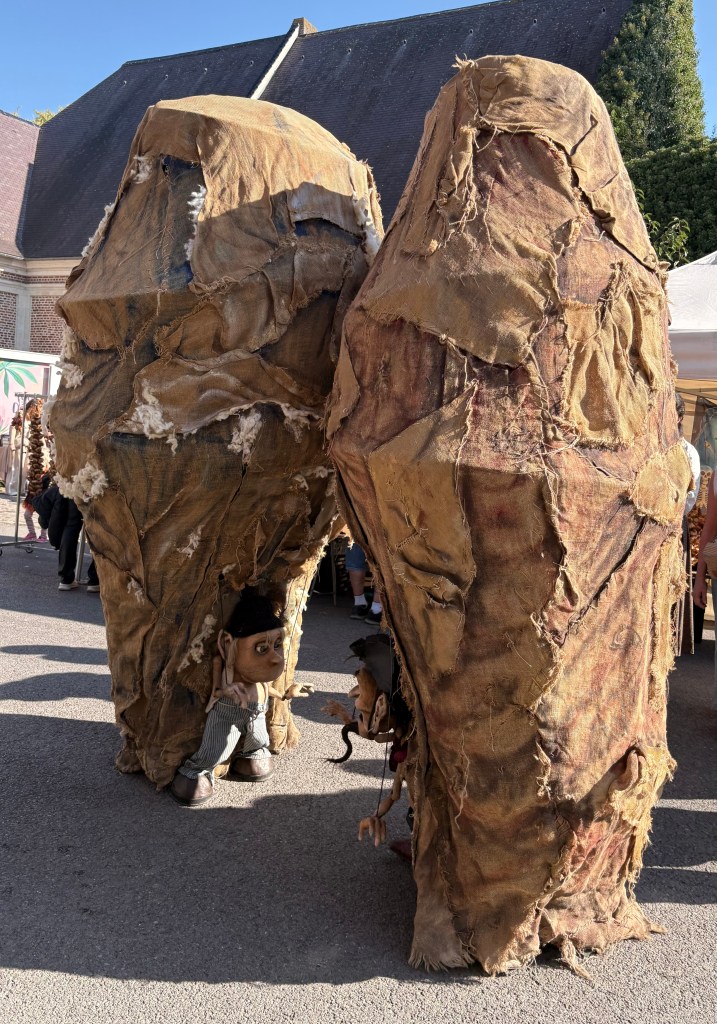
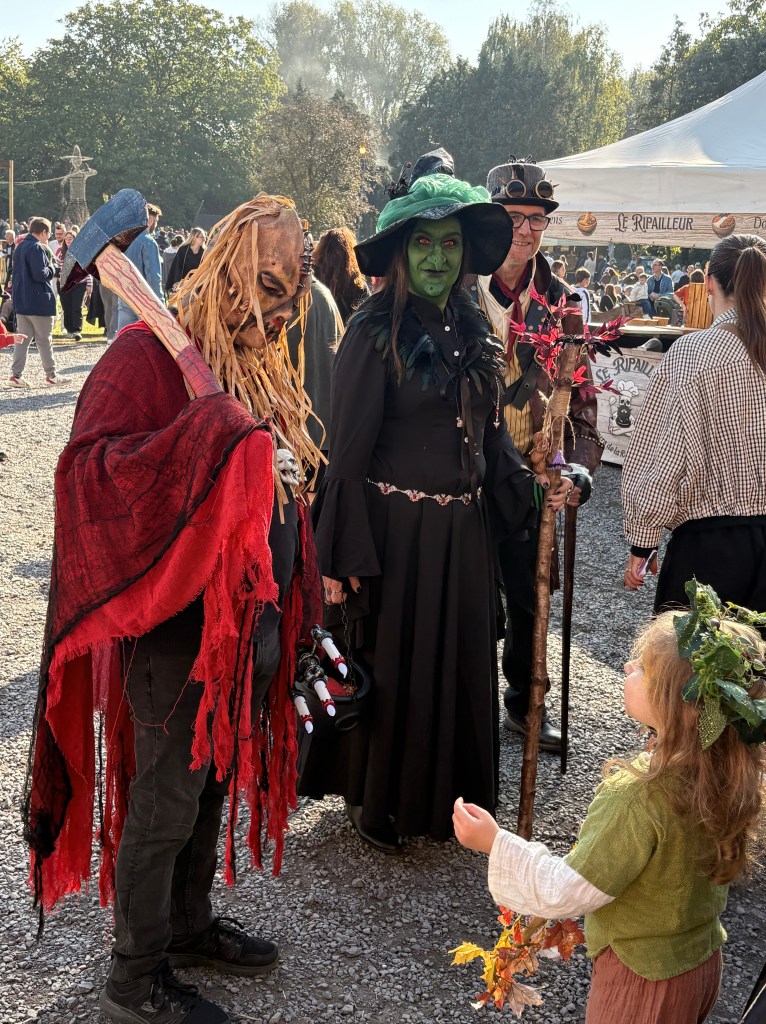
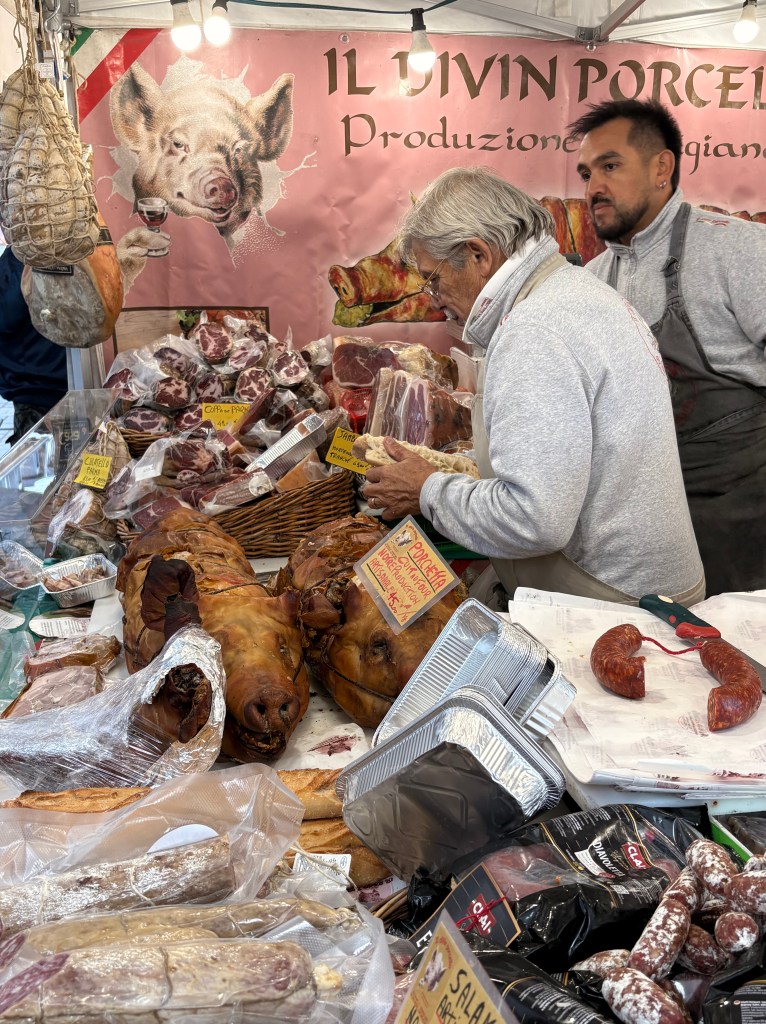
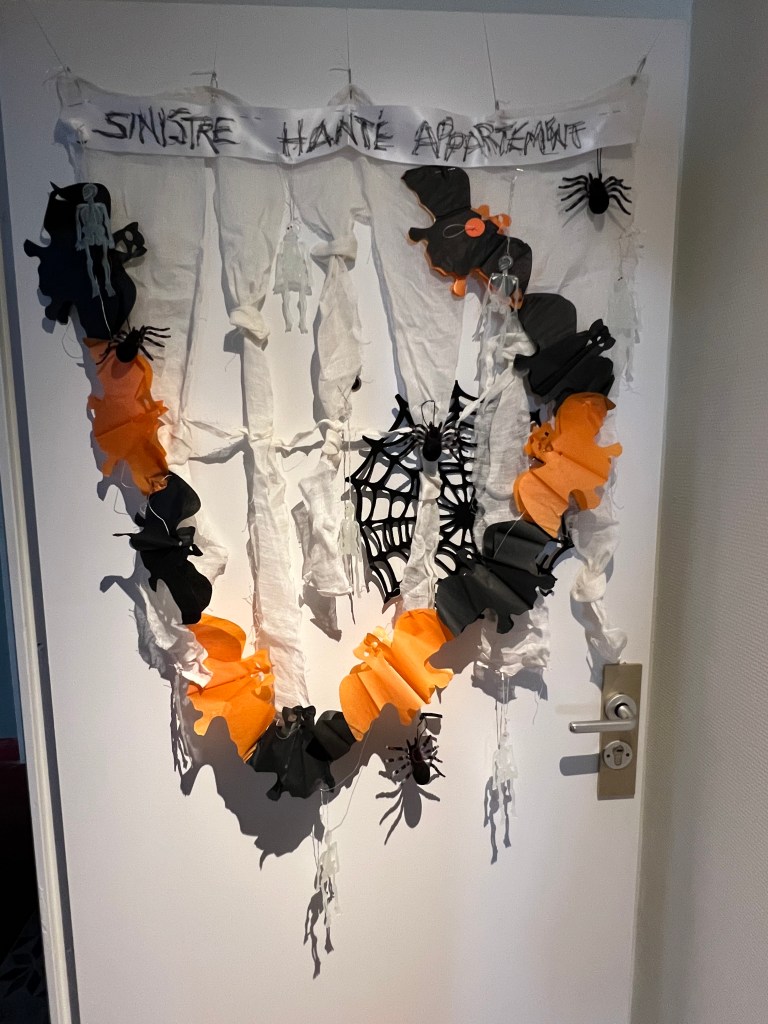
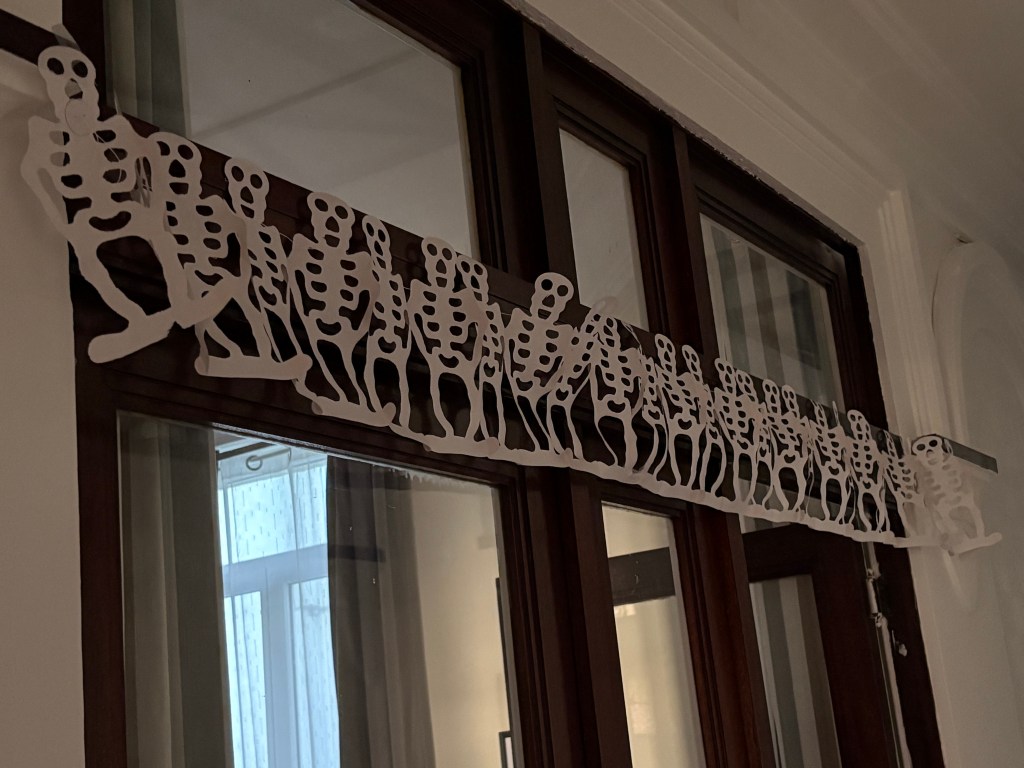
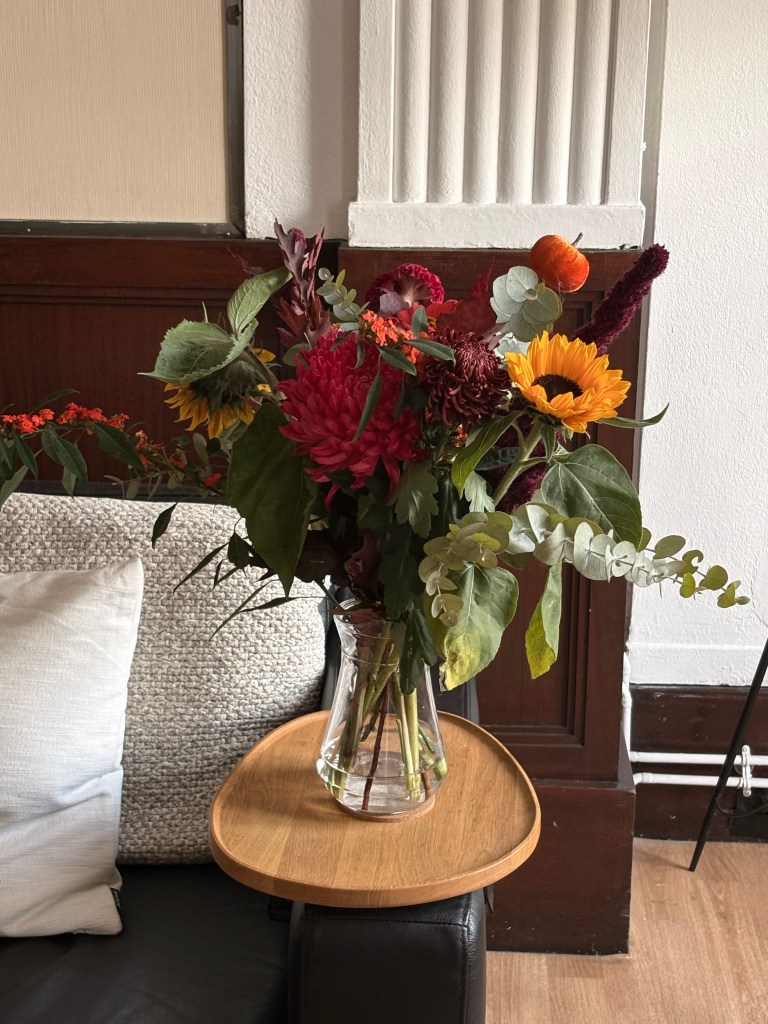
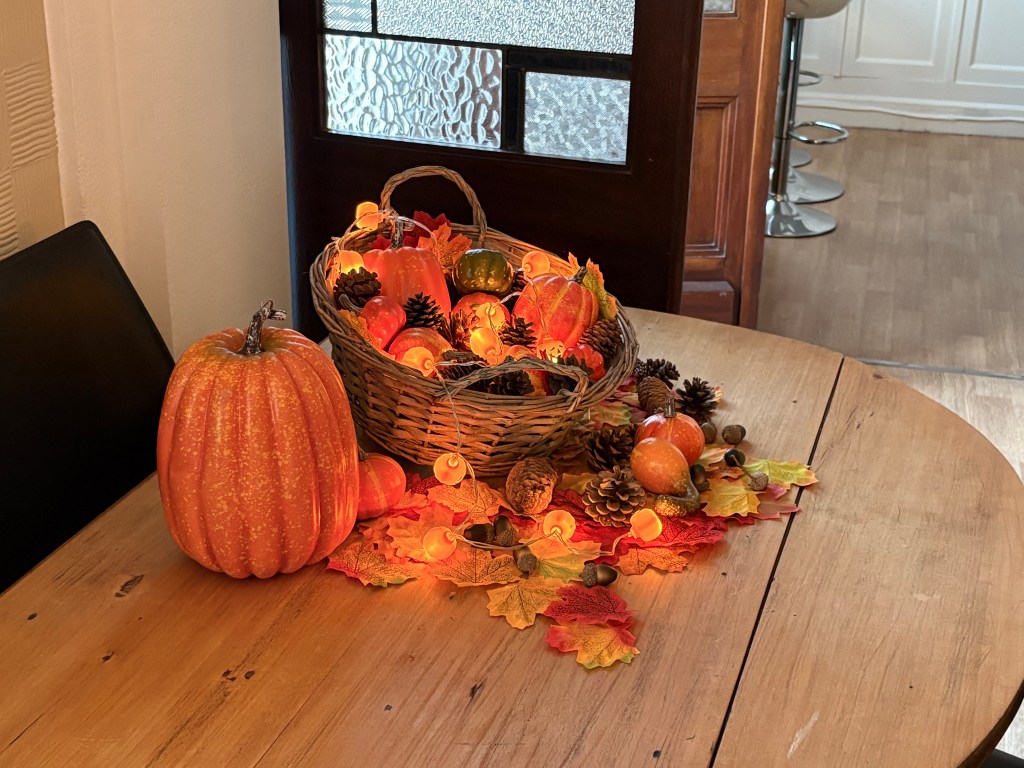
We had the annual Italian festival, with foods and wines in the plaza. G was fascinated with the whole pigs for sale and had to include a picture. In the second week, fall arrived quickly. In a two day span the temperature highs went from the mid 70’s to the mid 50’s, accompanied with cold winds, grey skies and rain. Instead of grousing about it (as I really don’t enjoy winter), I decided to become proactive. To start with, I decorated the apartment and front door with Halloween things (well, that was a hot mess when done) and an autumn pumpkin arrangement on our dining table – all to set the mood. I’ve also finally given in to the fact that I am always cold and need to reinforce my wardrobe to layer. While G is running around in a light shirt and maybe a sweater, I went all out and got silk thermals for the first layer, to top with a shirt, then a sweater and to bolster the bottom half I bought tights to go under the slacks. Armed to the teeth, I sally forth fearlessly. Or at least in comfort. I may be unhappy in winter but G is absolutely, undeniably and vocally miserable in the heat. Summer weather lasts here about 8 weeks. But as John Snow said, “Winter is coming.”
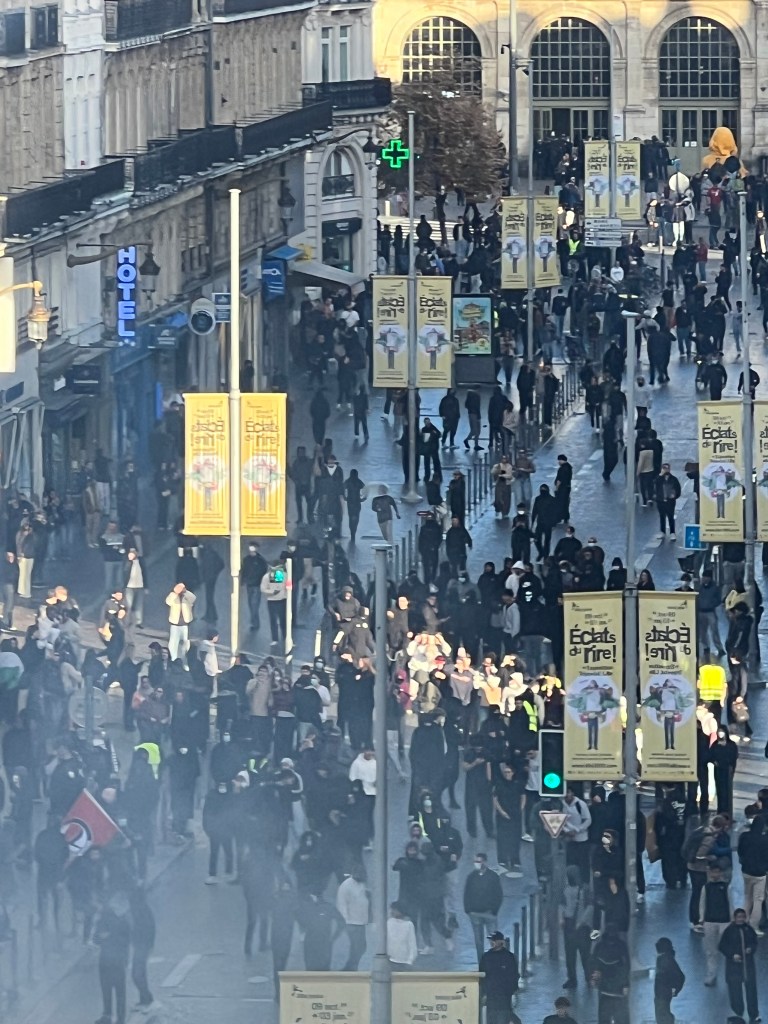
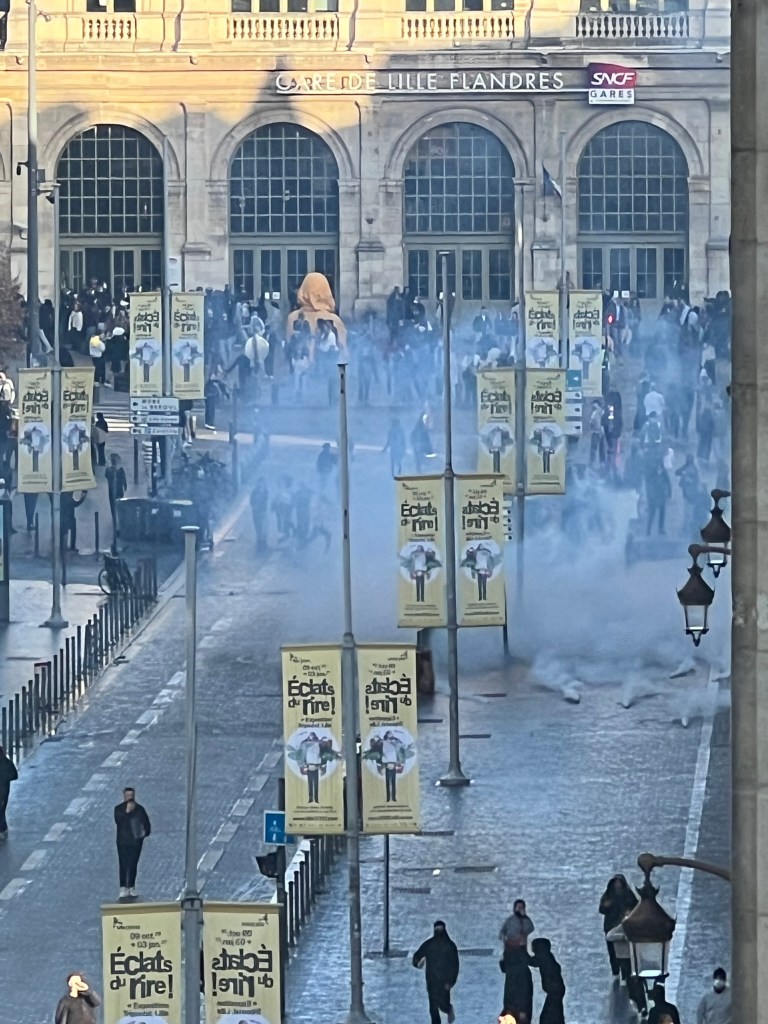
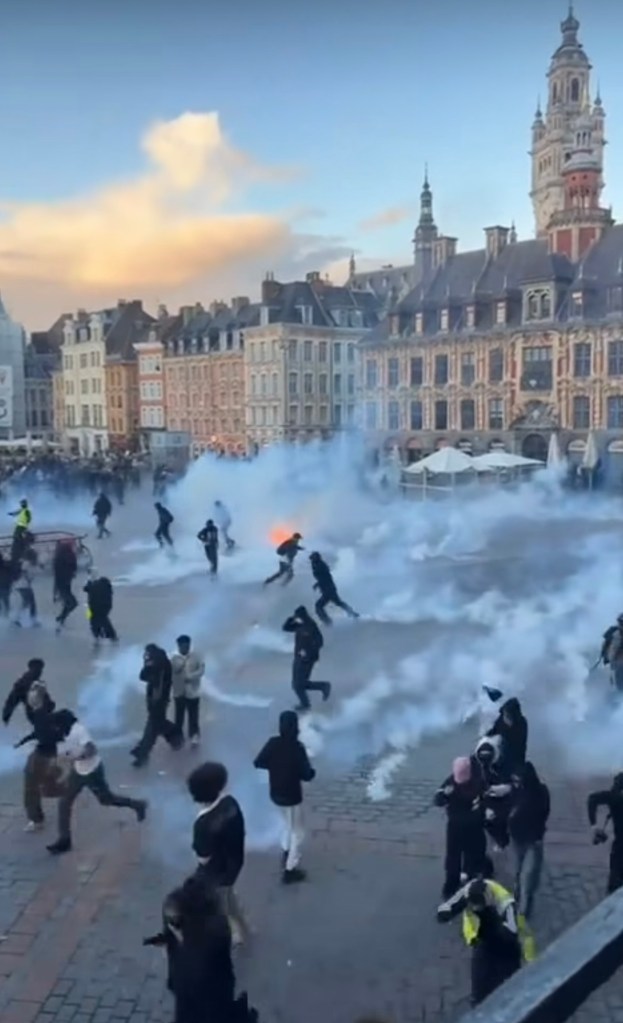
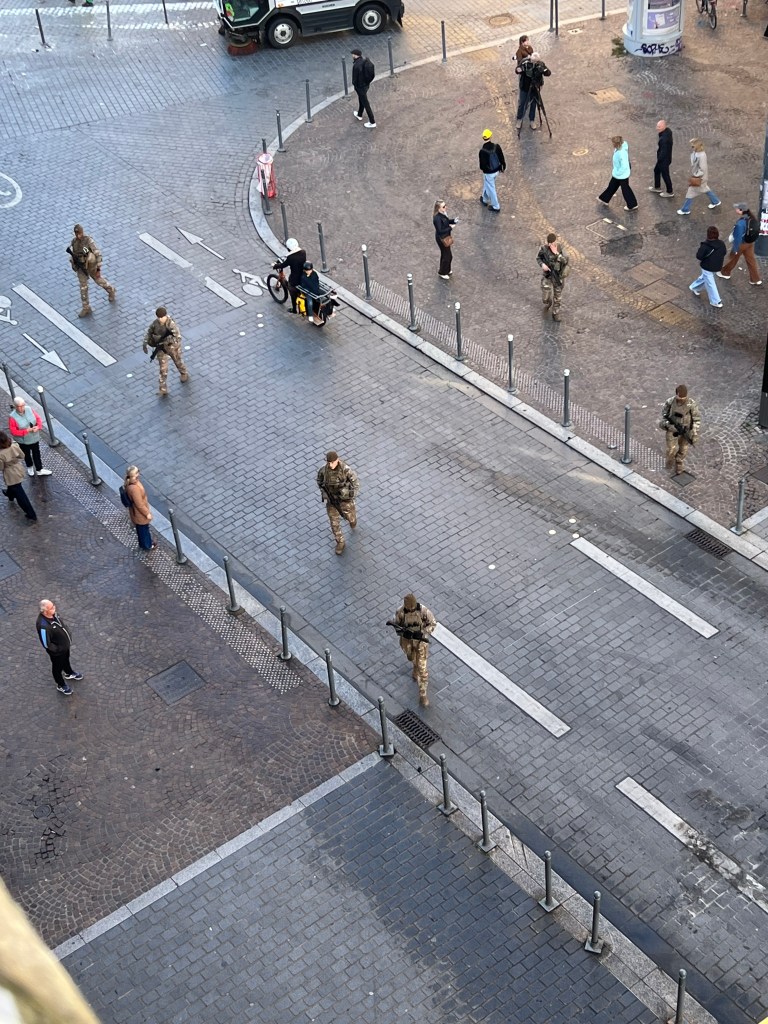
On the 17th, as I’m sure you’ve read in the news, Lille was one of several cities in France that had a protest that turned violent, and another, not as violent, on the 24th. As G’s phlebotomist said while he was having some blood work done and they were discussing the situation – ‘it’s complicated’ and worth a bit more explanation here.
It started, as French protests normally do, in a coordinated and organized march and protest that sometimes includes singing, chanting, loudspeakers, music, flares and “sound” bombs to attract attention. This protest was made up of high school and university students, the Gilets Jaunes (Yellow Vests), and other organizations and groups. The original Gilets Jaunes movement began in 2018-19 as a protest over a new fuel tax before spreading into a wider expression of discontent related to retirement system changes that President Macron was attempting to address. You can read some of our blog posts from then when we talked about the Yellow Vests protests. This time, rising fuel (oil, diesel, natural gas) prices are also cited as the cause, along with broader issues around the cost of living, tax rates, education and political representation.
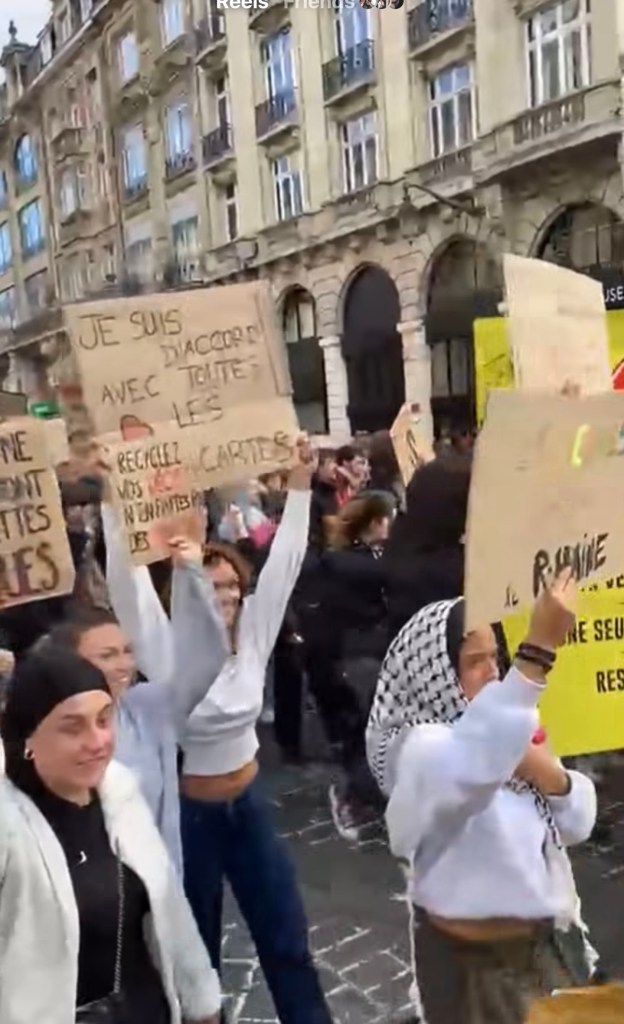
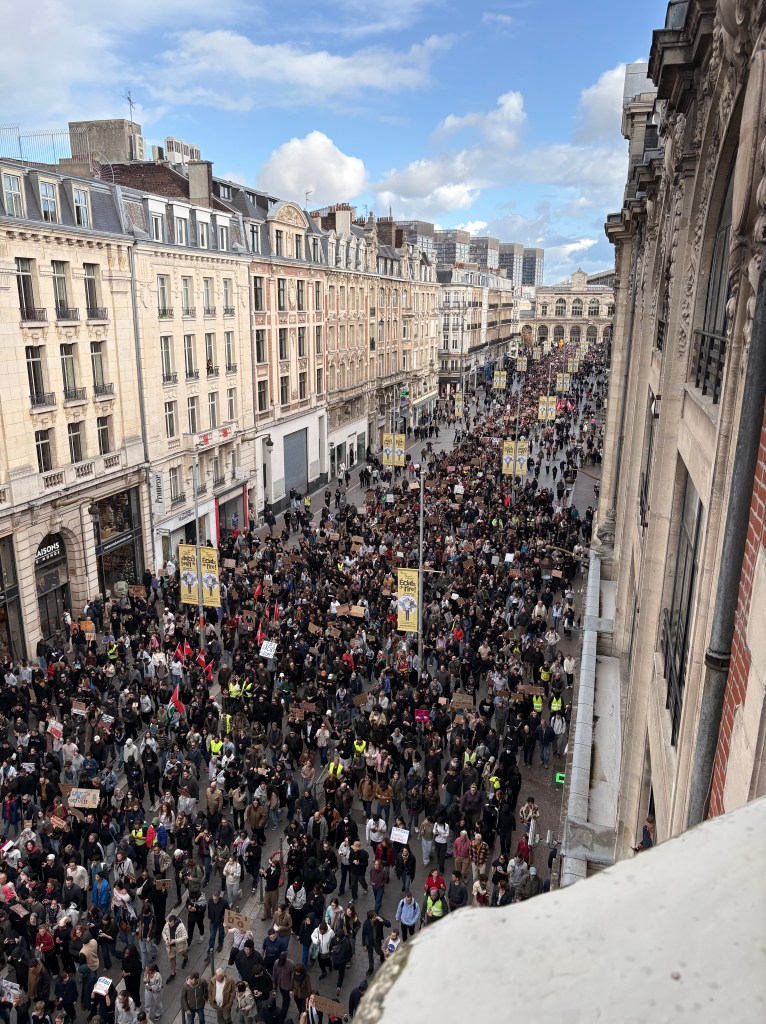
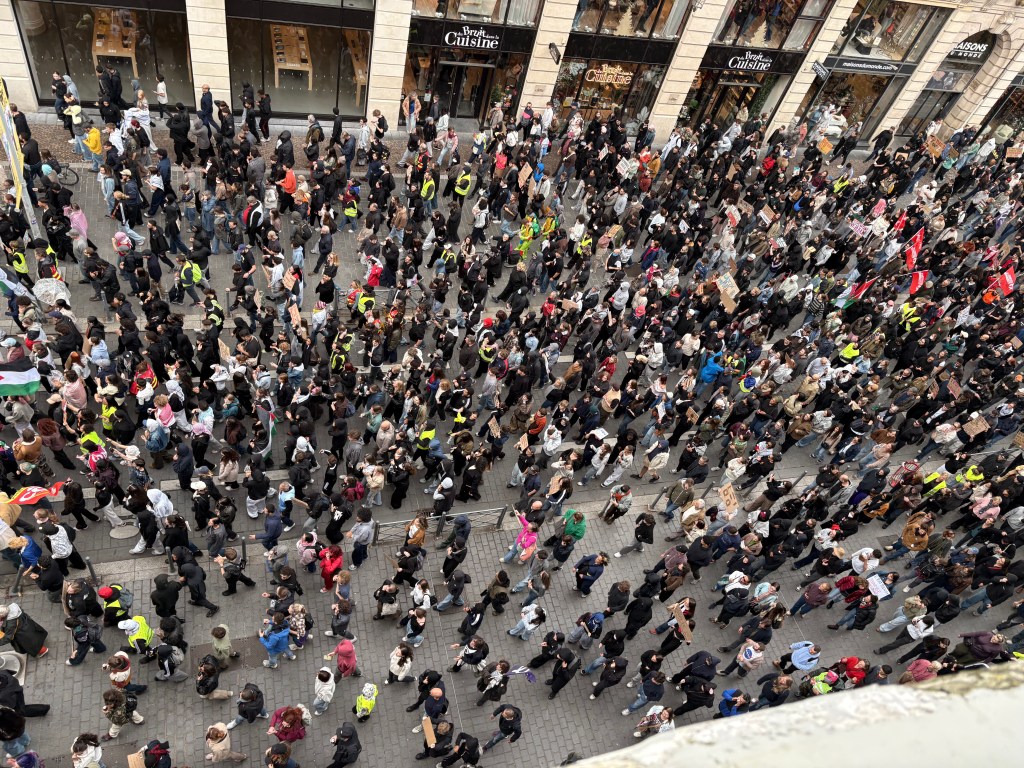
Lycée (high school) students have been a driving force behind the wider mobilization, with protests spreading across France since mid-September. Early October saw teenagers blockading schools to protest against a lack of resources and demand changes to the education system. Teachers are too few with the number of 35-40 students per class. The Gilets Jaunes have now called for a third day of protests. The movement’s demands have shifted since October 17th, when protesters focused on the rising cost of living and fuel prices in the country, as well as more resources needed for education and infrastructure, now focusing on public freedoms and the right to demonstrate. The lycée students will also continue to stage protests with the Gilets Jaune.
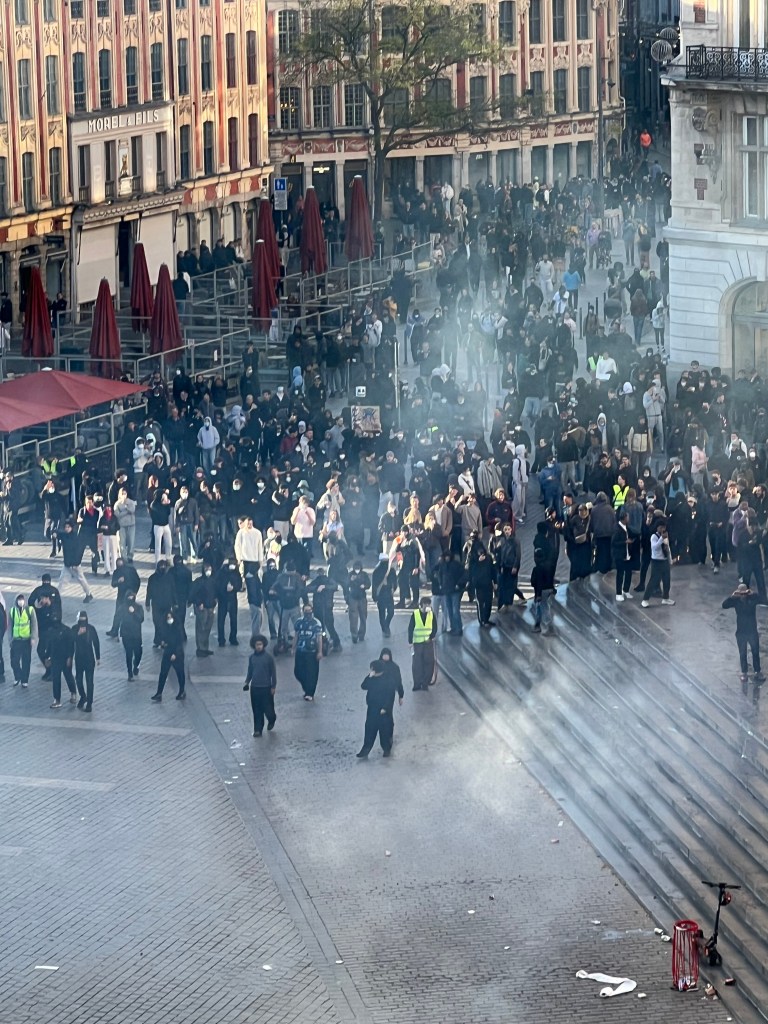
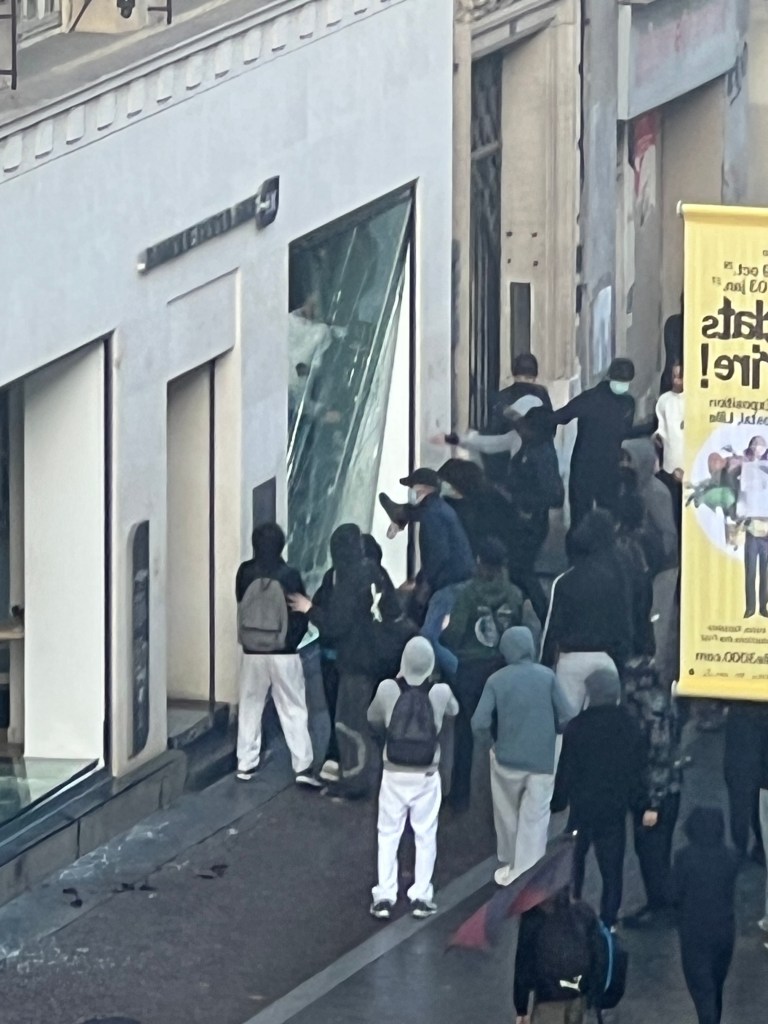
A very peaceful crowd packed the streets and the plaza on October 17. As they finished and exited, the vandals moved in. It is important to make these distinctions, even if there was some overlap. The violence and looting did not come from “protesters” as some headlines suggest. It came from groups dedicated to violence and looting.
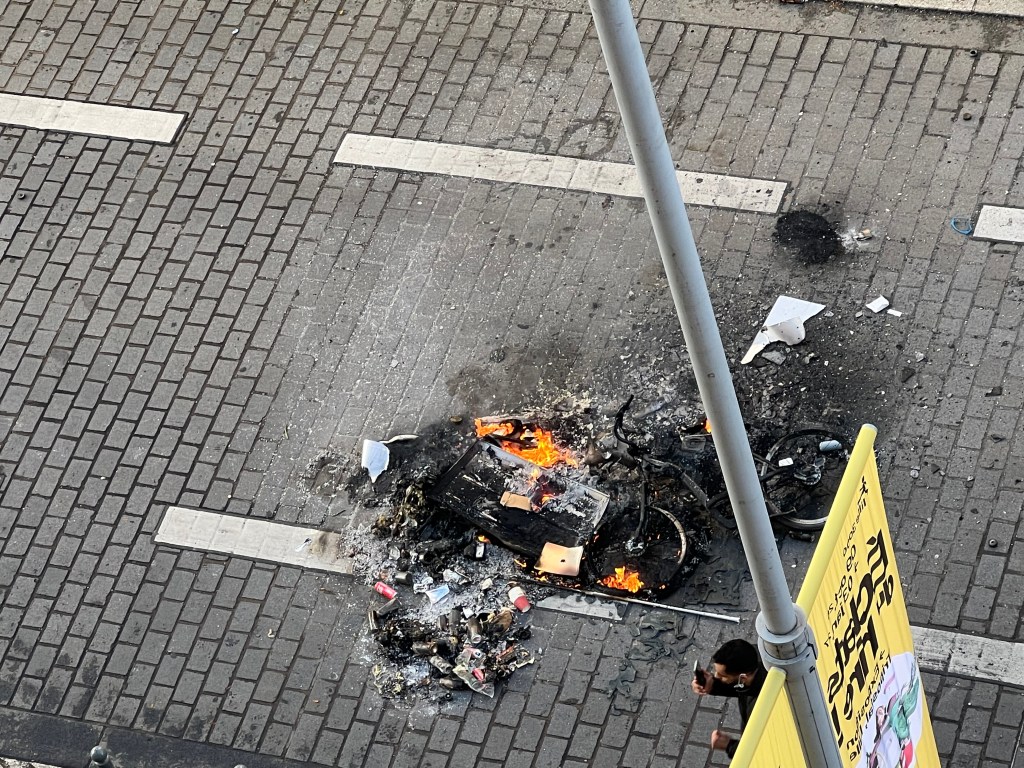
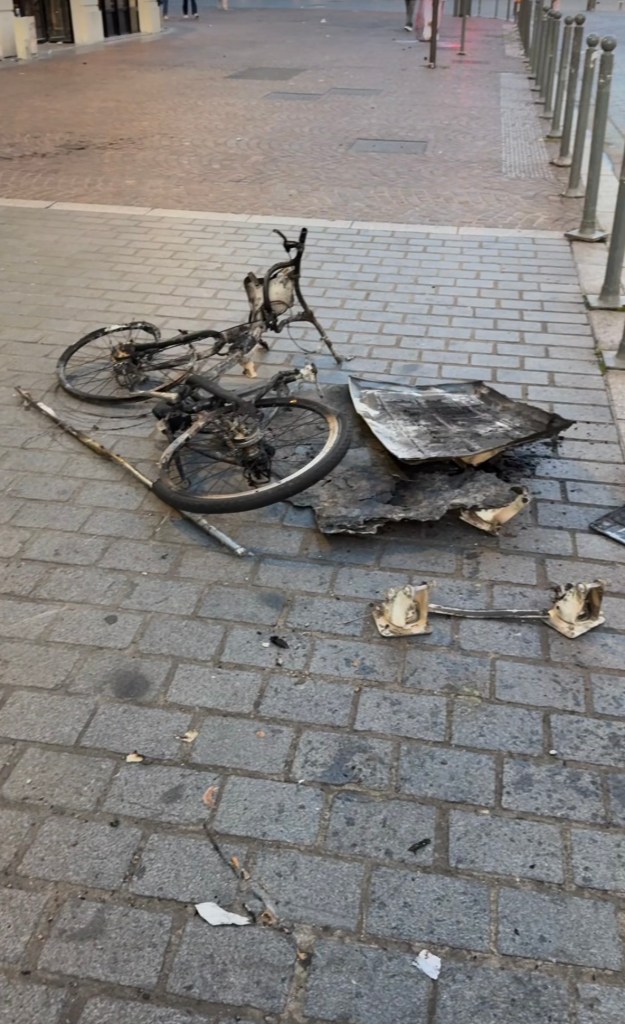
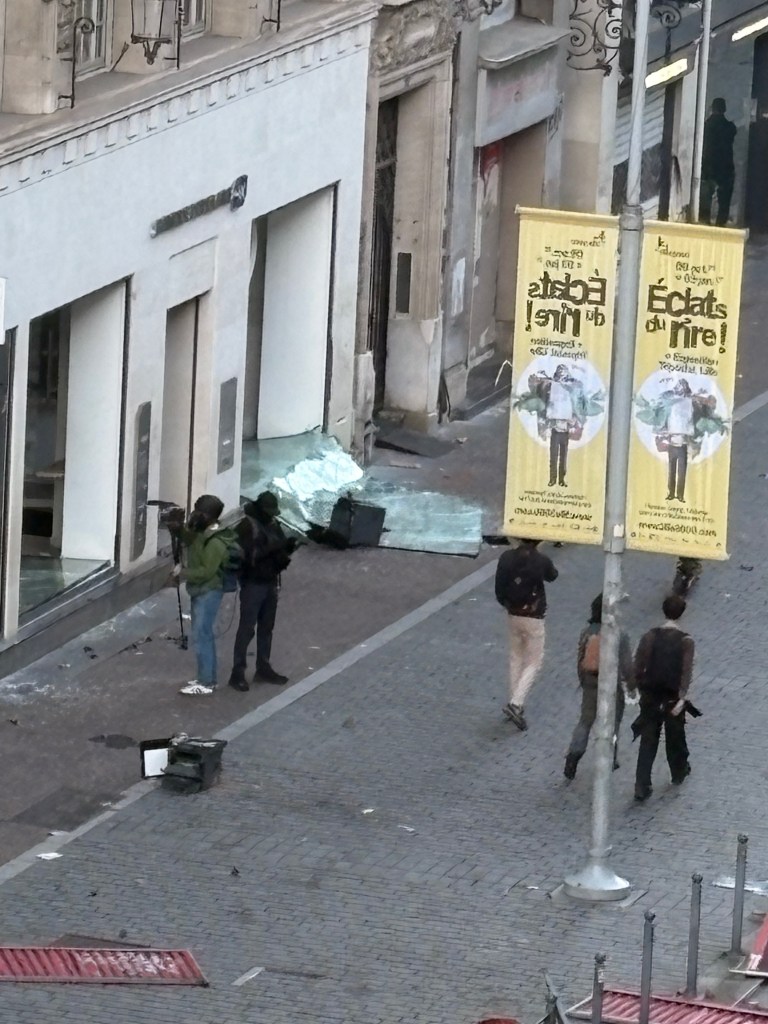
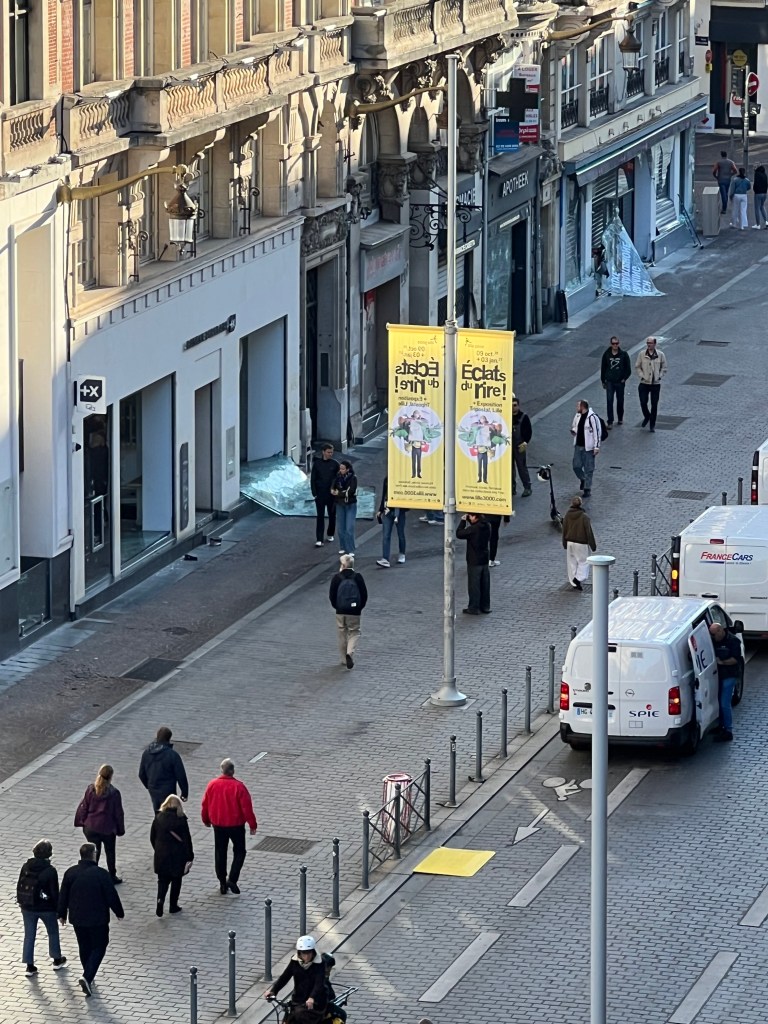
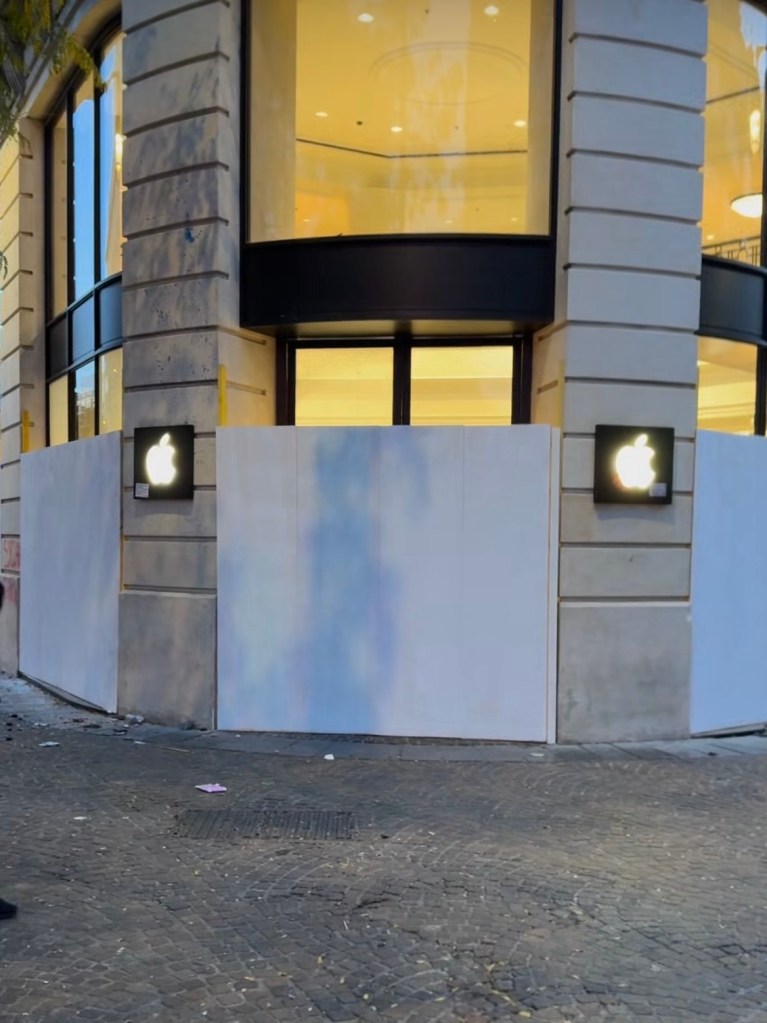
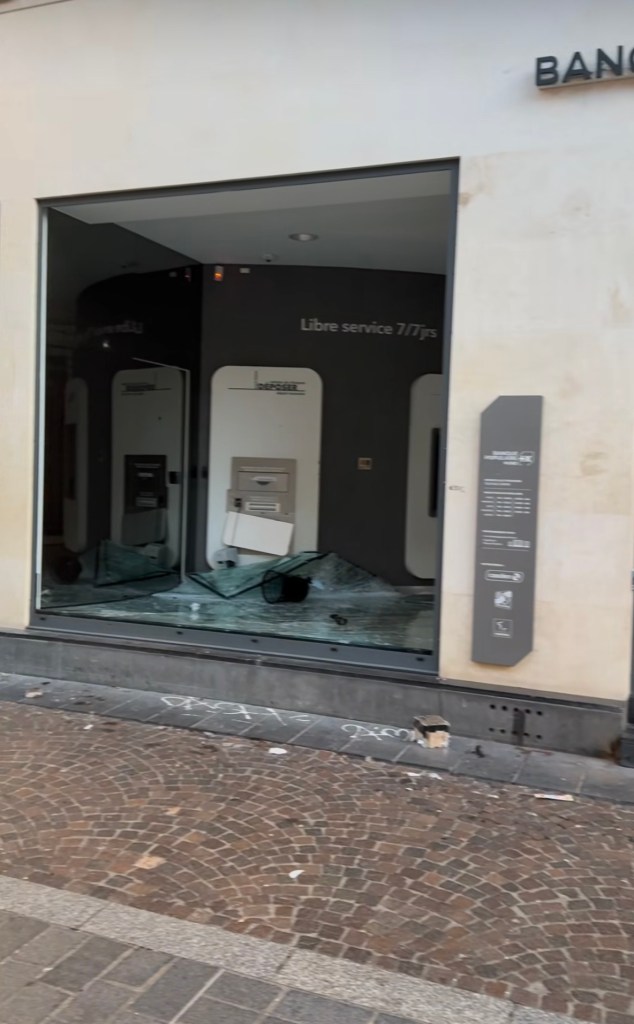
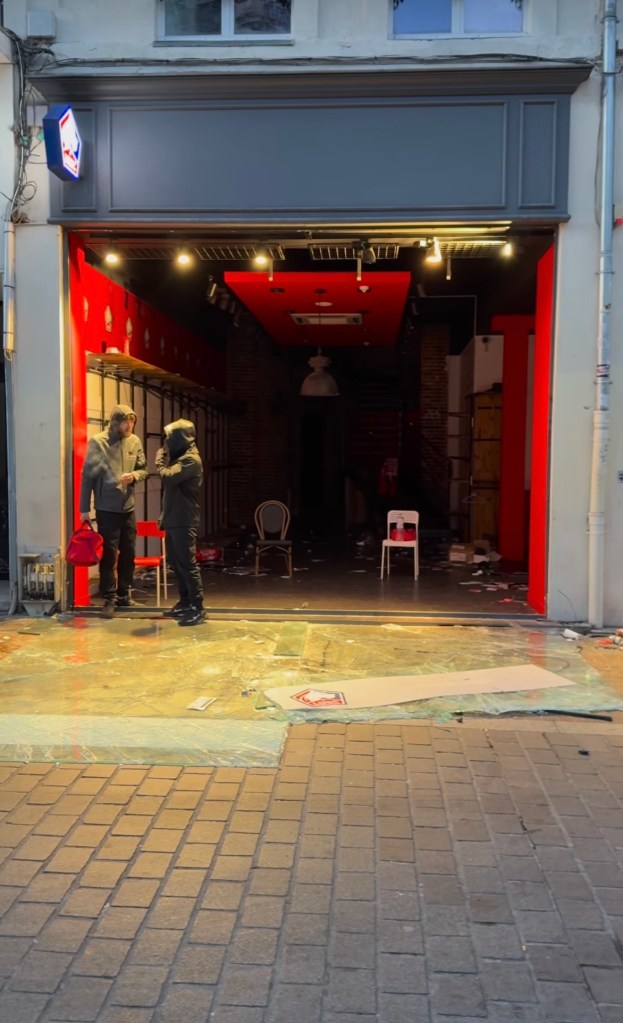
They were egged on by a few older instigators and cell phone recorders and proceeded to bash in several street front windows, looting, burning two businesses and set a pile of rubble in our street on fire. The police were woefully outnumbered and unable to address the unfolding scenes. The Apple store across from us was totally stripped of its goods, as were several other small businesses. After the fact, accusations were thrown, blaming immigrants – particularly Muslim – yet we can tell you for a fact after witnessing the whole mess from our balcony that they were all definitely French youths who came with the sole purpose of violence, in balaclava masks and hooded sweatshirts. Of those who have appeared before the courts so far charged in connection with October 17th, over 90 percent were born in France. These were not protesters, they were looters. It was truly heartbreaking to see. In the next week Lille, bruised but recovering, businesses replaced their windows and repaired their shops.
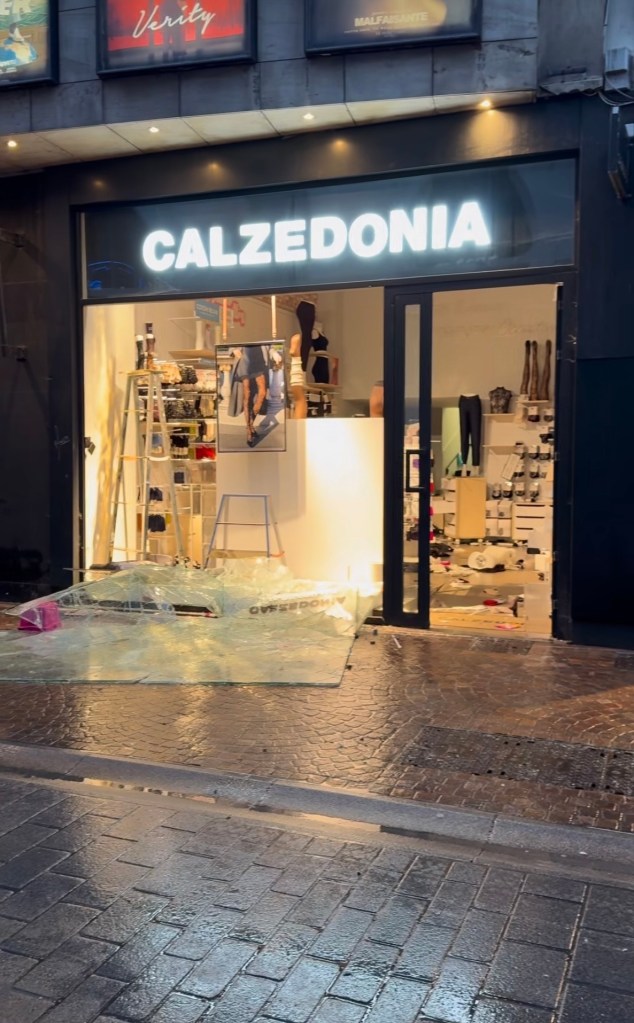
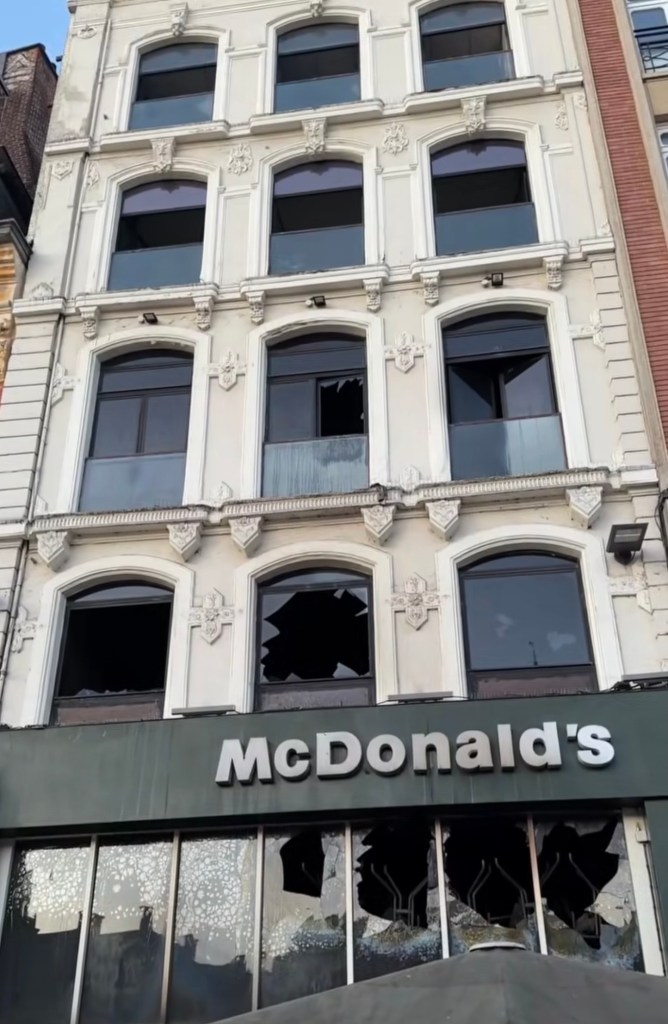
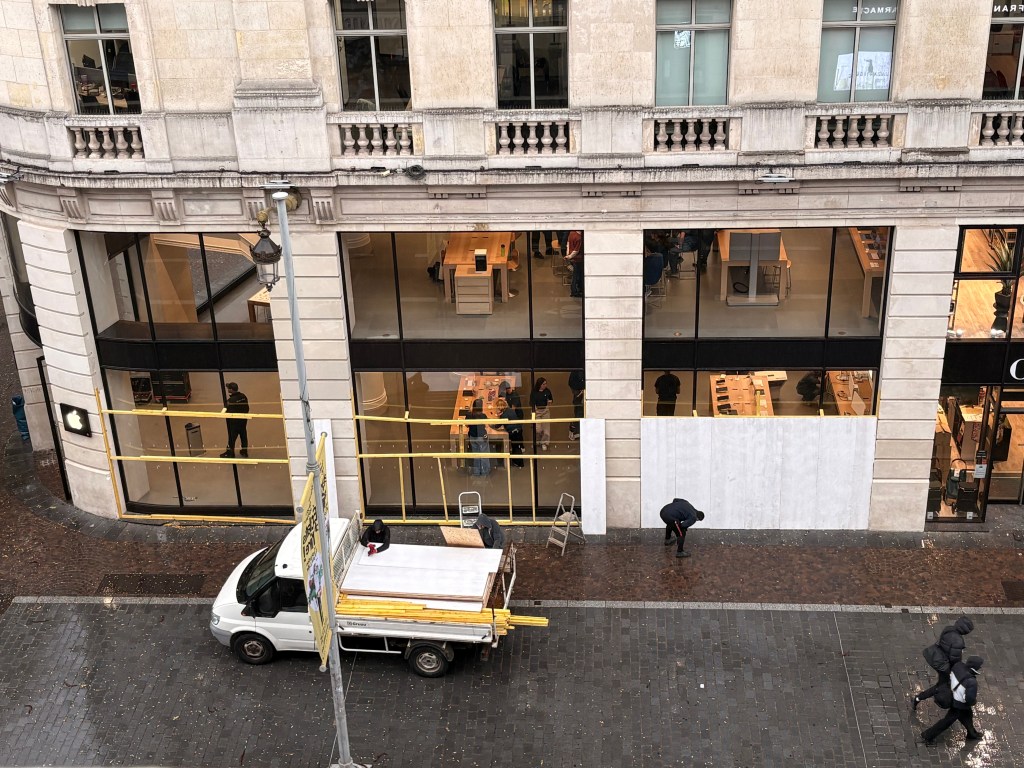
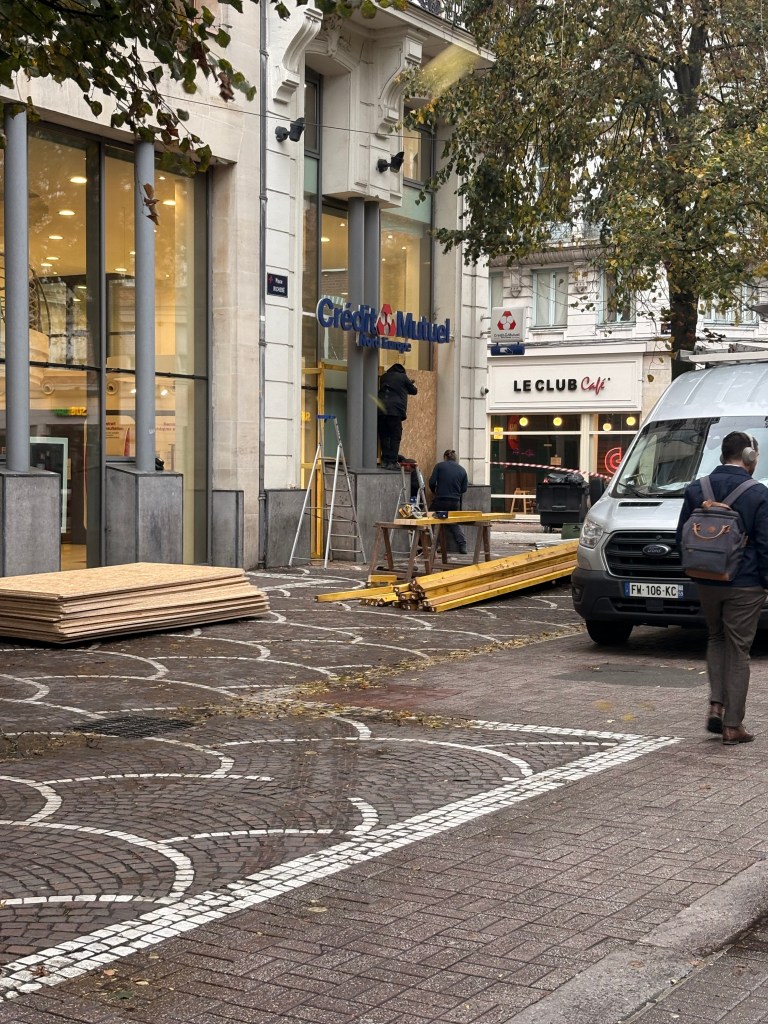
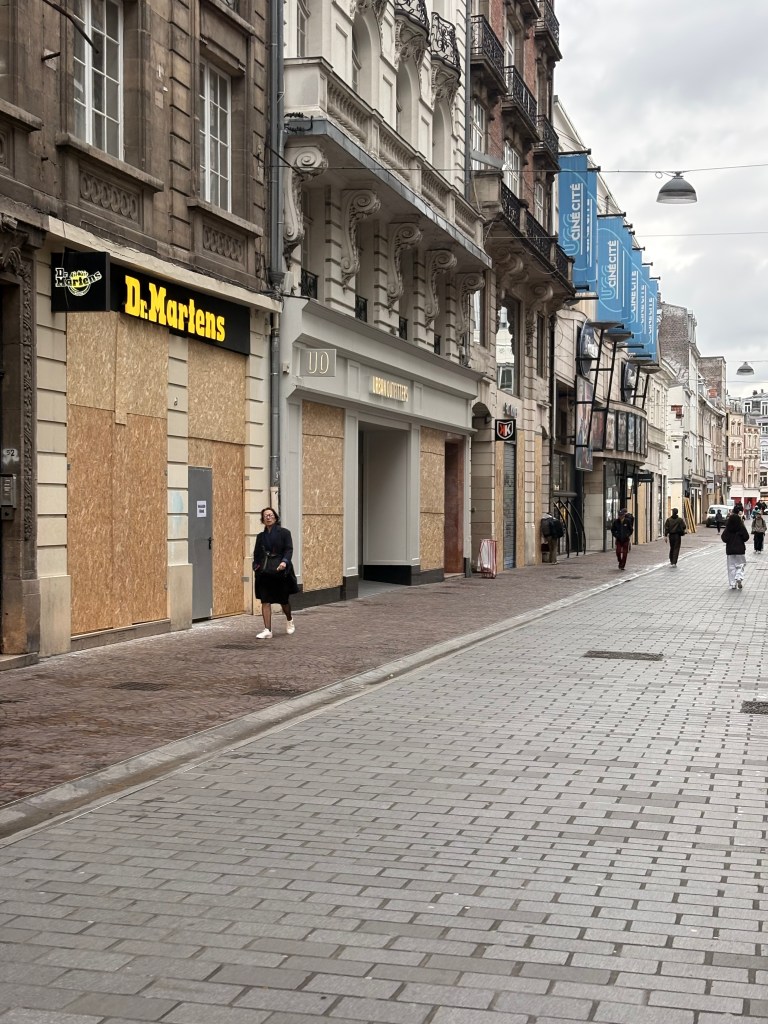
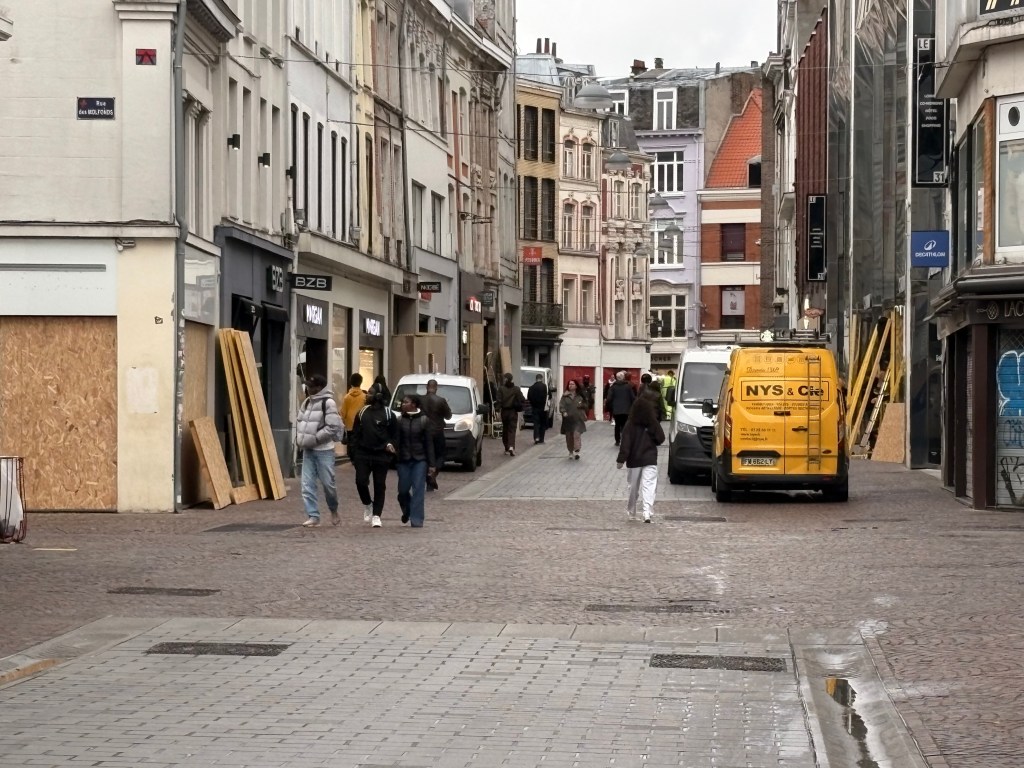
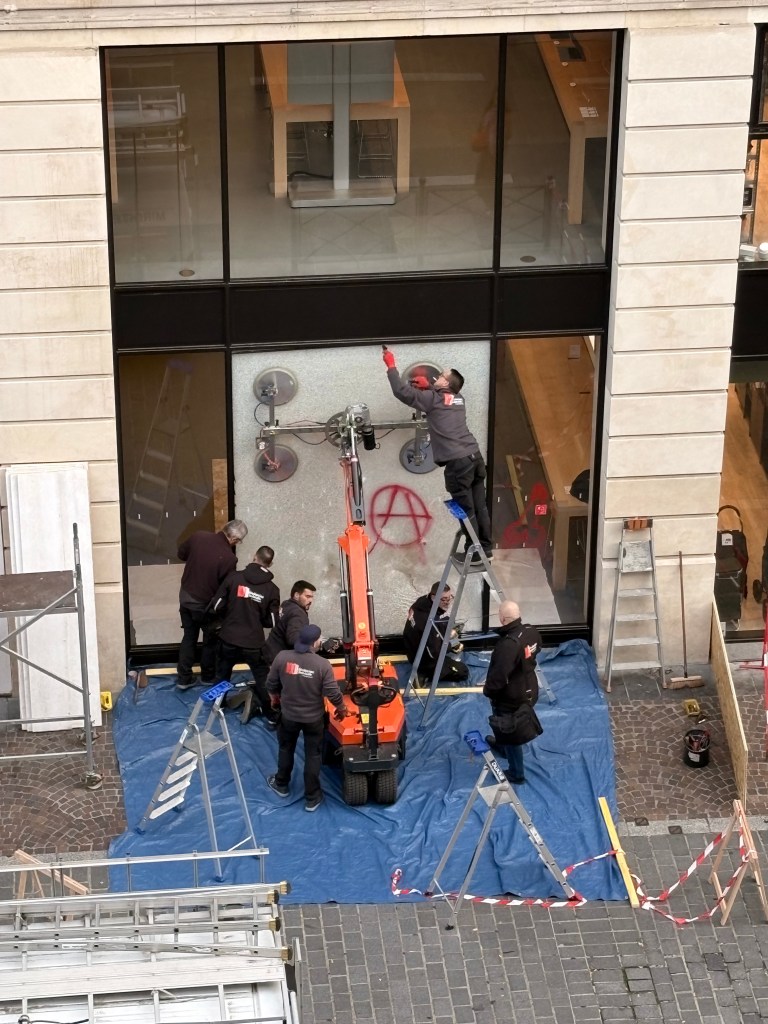
The below is an excerpt from Le Monde, October 21, 2026, at 4:59 am (Paris), updated on October 22, 2026, at 4:29 pm. Apologies (from G) for its length, but I found it informative.
How French protests are supposed to work
By William Audureau
How are protests in France supposed to play out when they are well organized? What are the precise procedures law enforcement units follow when maintaining public order? What challenges are inherent to such situations? Here is a step-by-step explanation.
Step one: Declaring a Protest
French law requires anyone organizing a political demonstration to declare the event at either the local prefecture or town hall, between three and 15 business days in advance.
This is a purely declarative step, and it does not constitute a formal request for authorization. However, it does allow the authorities to anticipate how many law enforcement officers they will need to secure the demonstration’s planned route, and make adjustments to the nearby area to help ensure the event proceeds smoothly.
Some organizers fail to declare their demonstrations in advance and, in these cases, do not have a thorough security plan implemented for their protest. If identified, they can be prosecuted for their responsibility in organizing undeclared protests.
What the municipal government does to prepare
Mayors have several tools to help ensure that protests proceed smoothly. For example, they can adjust access to certain streets in the area (by closing off streets or setting up detours) to ease the procession’s passage. They can also order shops to close or have parked vehicles removed from the demonstration’s planned route to prevent them from being vandalized. For example, on October 15, the City of Toulouse (southern France) asked residents not to put their garbage bins out on the street, for fear of protestors burning them.
Finally, mayors can, in agreement with the local prefect, restrict or even ban a protest if they deem it to be a threat to public “order, safety, or security.” For instance, Chantal Martin, the mayor of Moûtiers, in the Alps, banned a truck drivers’ protest after several clashes with gendarmes in February 2025.
Because protesting is a fundamental right, such bans can be challenged in an administrative court, which will assess the actual risks the demonstration entails and whether or not the measure was proportionate. It is also more difficult to justify such a ban for nationwide protests.
The prefect: A key, strategic figure
During a protest, the prefect, the French state’s local representative, is responsible for policing.
The prefect serves as the main point of contact for the demonstration’s organizers, and together they come to an agreement on the route, the timing and the required deployment of law enforcement services. The prefect can also issue a ban on carrying any object that could be used as a weapon.
If incidents broke out during previous demonstrations of a similar nature, the prefect can also, as a preventive measure, ban gatherings or impose curfews – most often from 10 pm to 5 am – as has happened in several cities this week.
Finally, the prefect can also make off-limits neighborhoods they deem sensitive. For example, on October 17, the Paris Police Prefecture banned protests in several key areas of the capital city, including the Champs-Elysées and train stations.
Police deployment
The Interior Ministry is responsible for determining how many law enforcement officers to allocate to each protest at the national level. For the day of October 17, 60,000 gendarmes and police officers were deployed across France, according to Interior Minister Laurent Nuñez. This was fewer than the number deployed for previous large events in recent years (90,000 for New Year’s Eve 2025 or, in a more comparable example, 89,000 for the “Act IV” demonstration of the Yellow Vest movement, on December 8, 2018).
Security for smaller protests is generally provided by local units. For major events, however, the Interior Ministry decides whether to organize a more substantial deployment in advance, prioritizing deployments based on the forces it has available in the area and recommendations from the local prefect.
For large-scale protests, two types of units specializing in crowd control and riots are mainly tasked with maintaining public order: mobile gendarmes and CRS police. Each department and its prefecture also has its own specialized units, such as departmental intervention companies. These forces can, moreover, be supplemented by motorcycle police units (BRAV-M), which were recreated during the Yellow Vest protests, or by the police anti-crime brigade (BAC), which is not trained to specialize in crowd control.
What can be done if unrest breaks out
France’s protest policing doctrine is based on the idea of a gradual increase in the use of force. As long as the protest proceeds without incident, law enforcement officers are required to maintain an observation stance, known as “strategic withdrawal.”
If incidents occur, the officers are authorized, on orders from their superiors, to carry out “offensive advances” – meaning charges against protesters – and to use tear gas grenades or sting-ball grenades. They may even use rubber-bullet launchers as a last resort if the situation gets out of control and they are targeted by violence. The escalation is supposed to follow a very precise legal framework of gradual increases. In practice, it is not always followed.
In theory, this escalation can also be reversed. In practice, however, once law enforcement units resort to using force, it is rare for the situation to return to total calm before the protest disperses.
Possible reinforcements
French law states that “under no circumstances” can municipal police be tasked with policing demonstrations. However, when faced with a situation of unrest, the established security plan can, at times, be adapted in an improvised way. For example, Benoît Payan, the mayor of Marseille, said he was surprised to find that, on October 17, Marseille’s municipal police were the ones “holding the city.”
As for the army, it can only be called in if traditional means of maintaining public order are “considered unavailable, unsuitable, nonexistent or insufficient,” according to ministerial instructions dating back to November 14, 2017. This is the most extreme scenario and has never happened to date. Excerpt from Le Monde, October 21, 2026
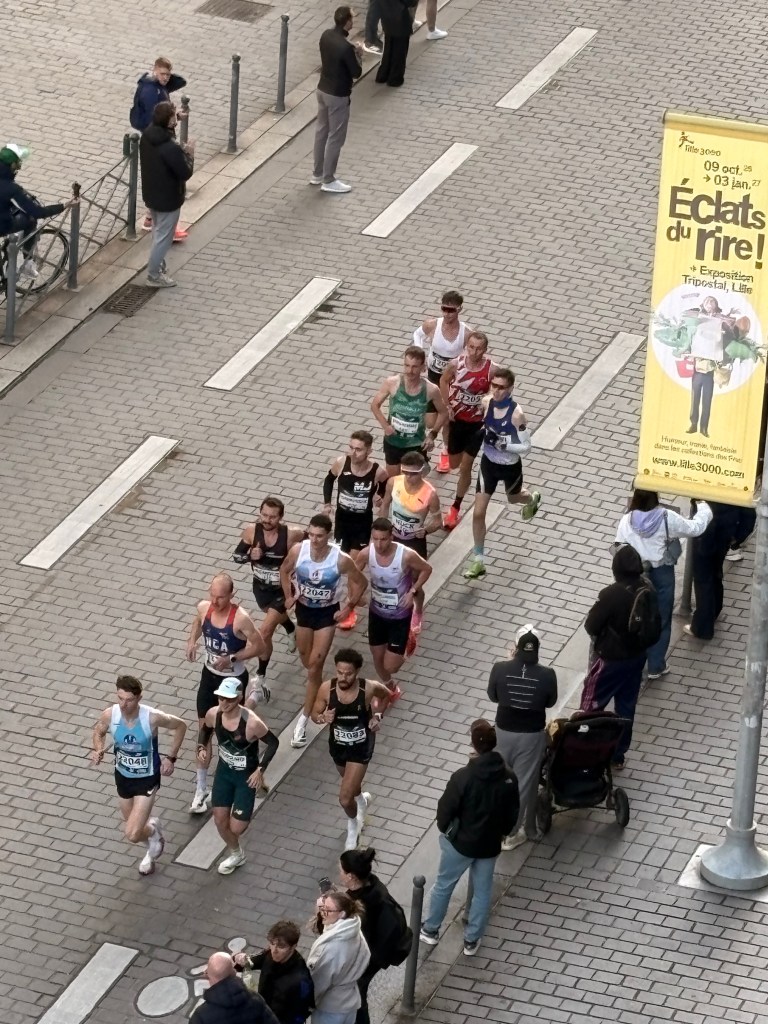
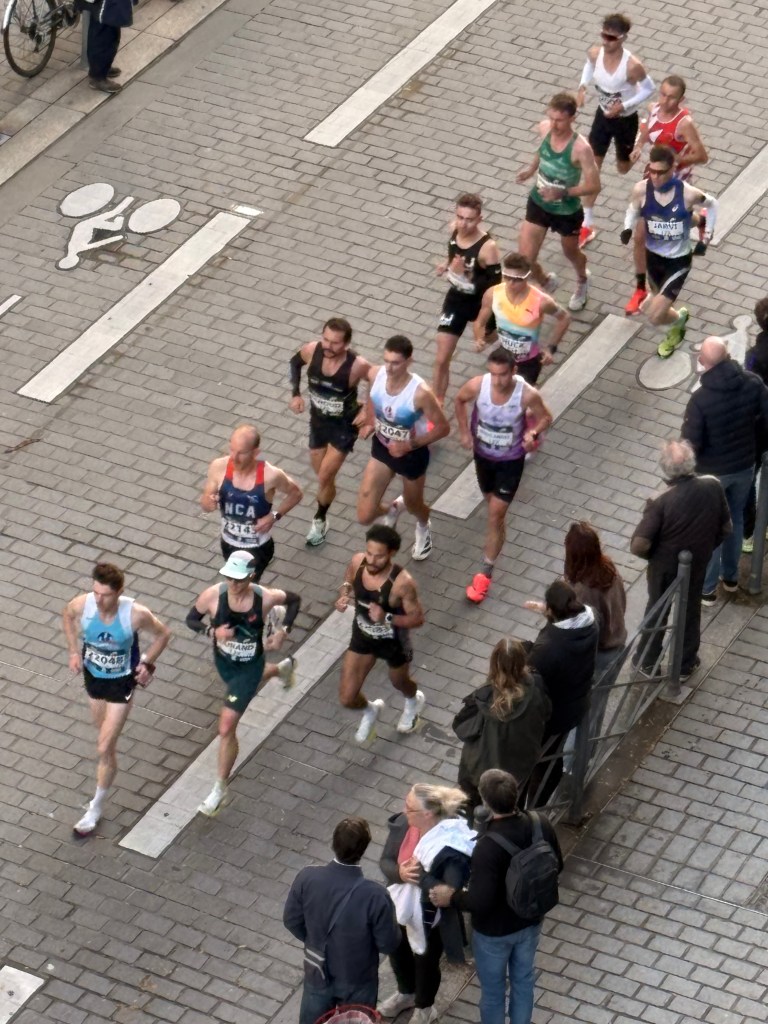
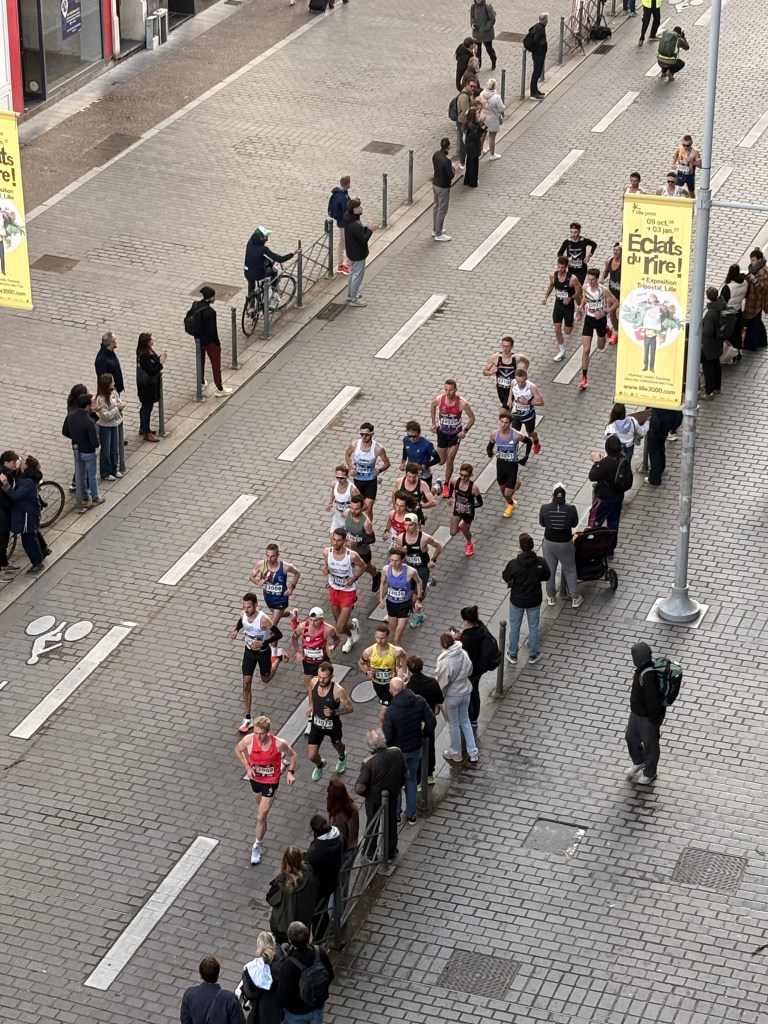
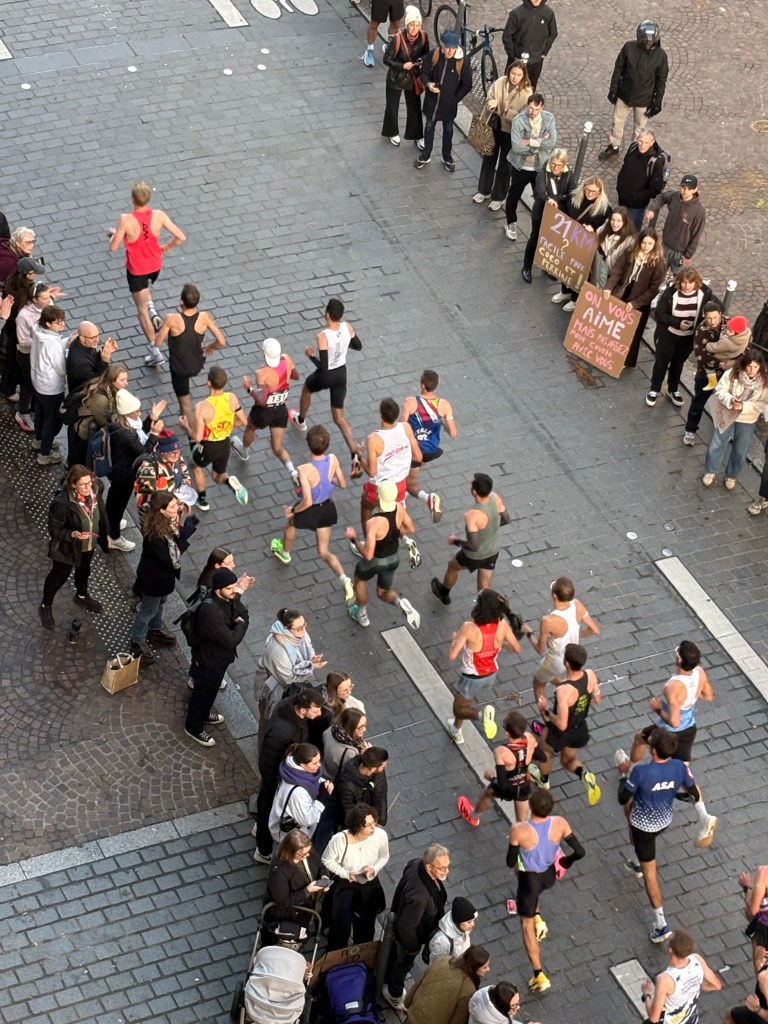
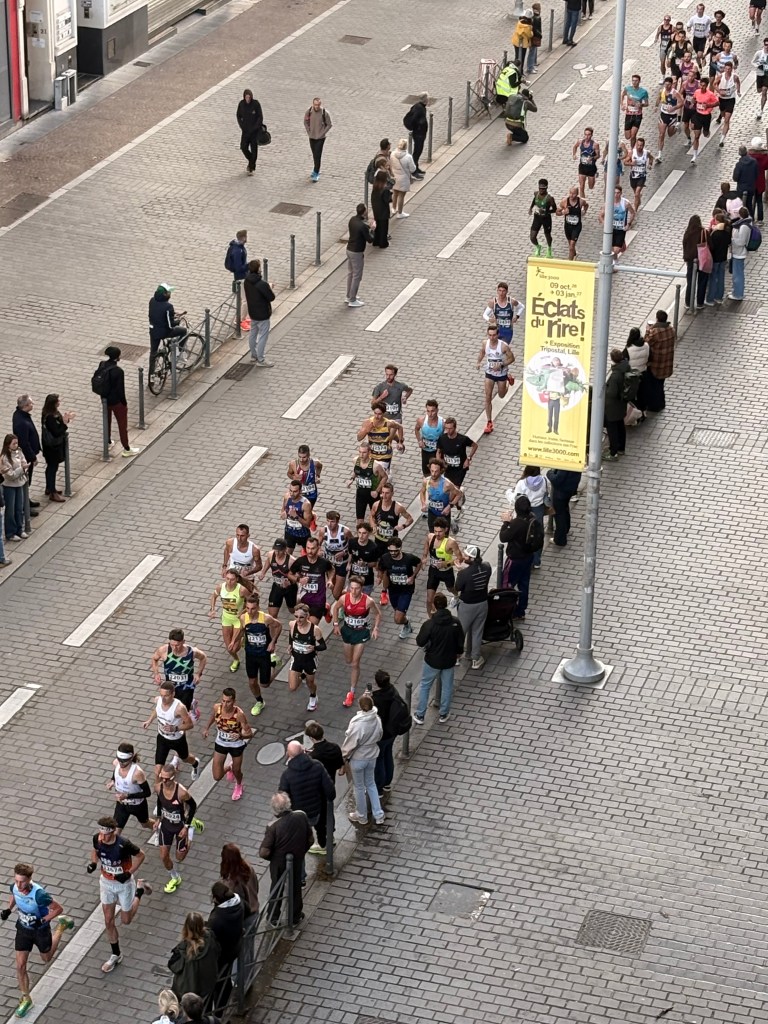
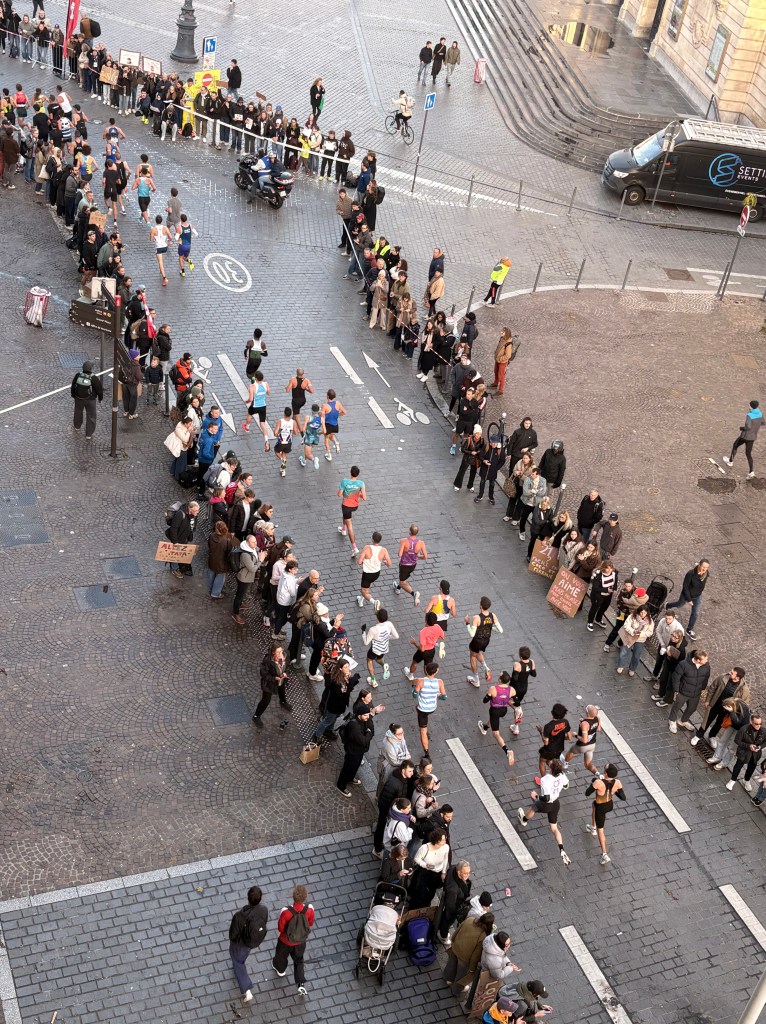
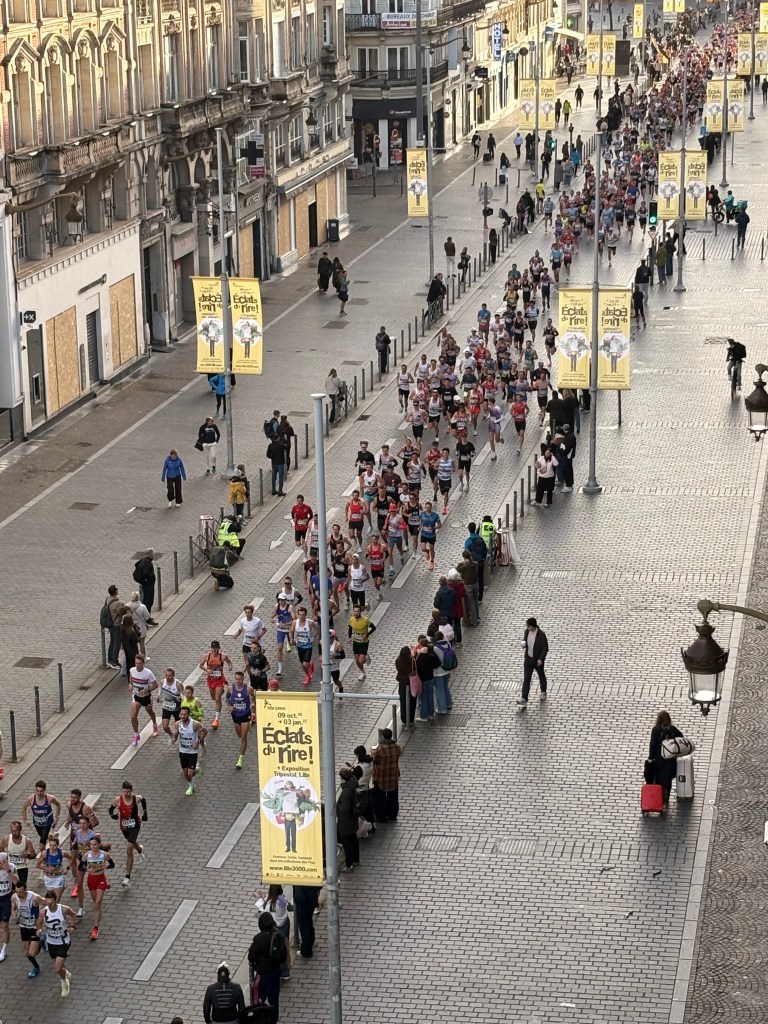
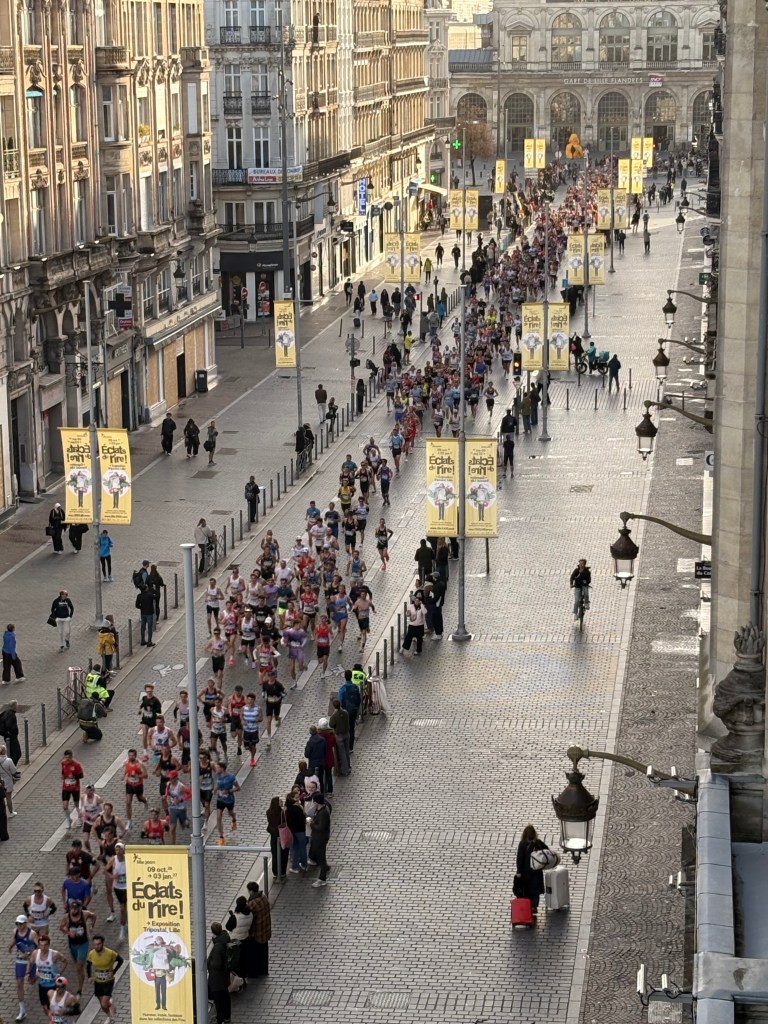
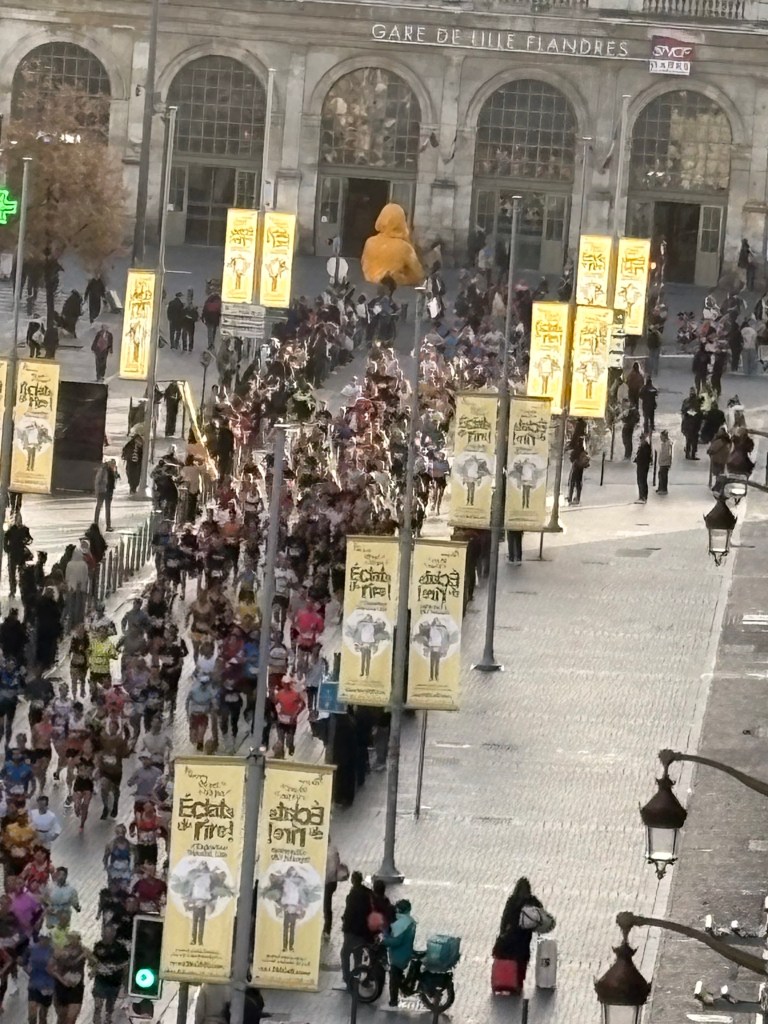
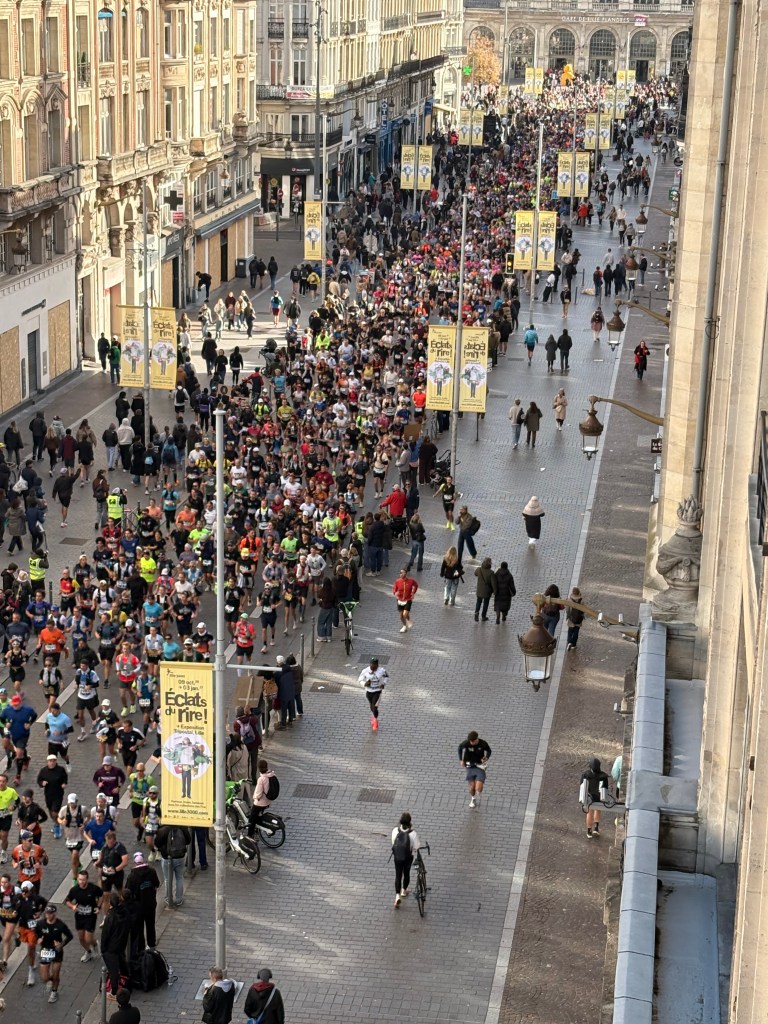
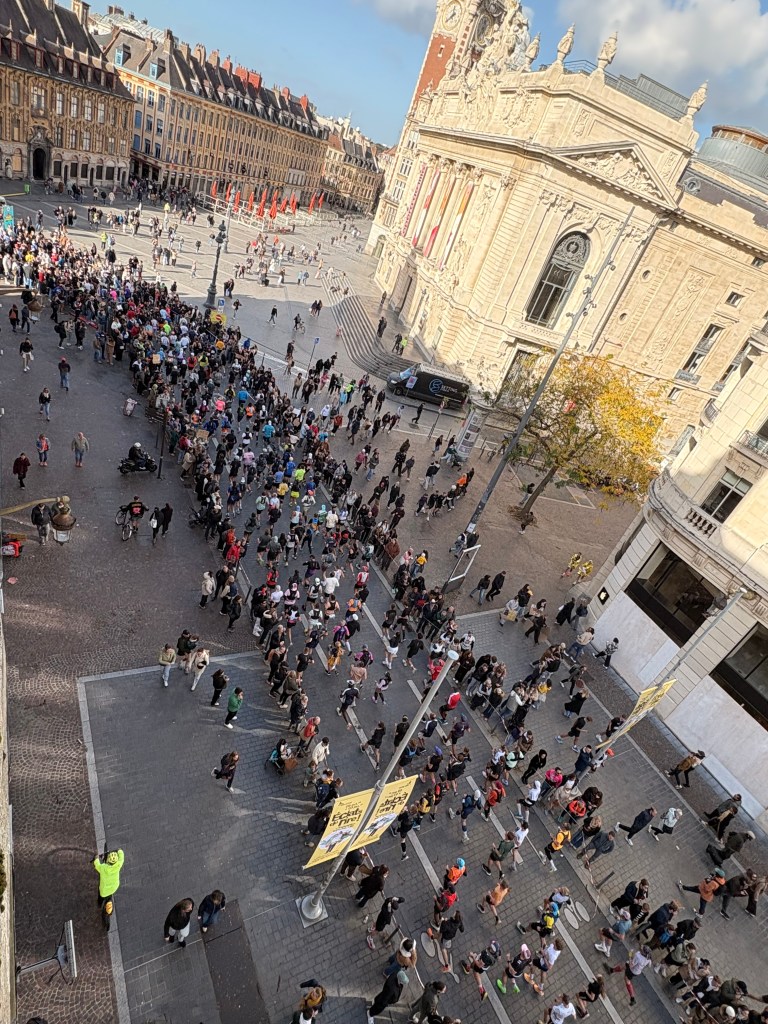
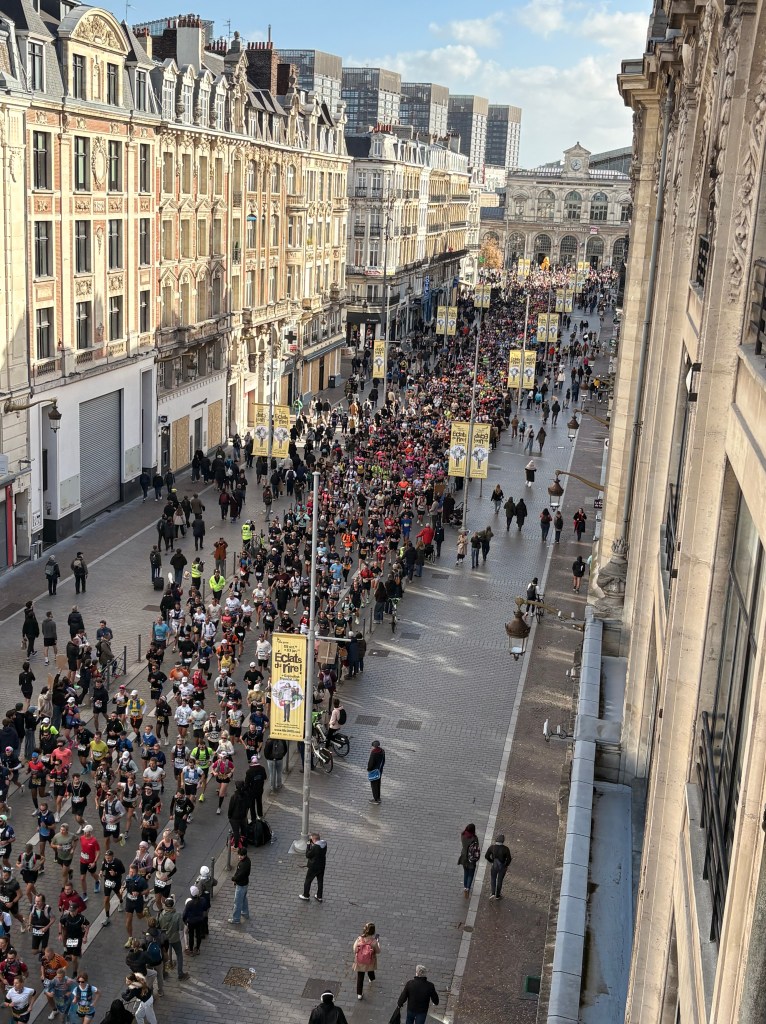
So back to regular events in Lille, this last Sunday, the 25th, we watched as 35,000 marathon runners made their way past our balcony with steady, clamorous cheering from the sidewalk fans. With that many participants, the stream of runners were passing us most of the day and it was just perfect sunny weather. The Lille Marathon is an international marathon event and It was held consecutively from 1986 to 1995, after which it was discontinued due to logistical and budgetary reasons. On October 25, 2026, the event officially returned featuring a 42.195 km marathon, a half marathon , and a 10 km race. The event is named “Trek Marathon de Lille” and holds the FFA (French Athletics Federation) Gold Label certification. It is a qualifying race for the French Championships and the second marathon event in France after Paris. Lille hadn’t hosted a marathon in 31 years. The day before, a storm had swept through the area with rain, fallen trees and strong wind. By Sunday morning the sun was out and the course had been cleared. Large crowds lined the route and the atmosphere was exceptional and loud. Only the wind made life a bit hard for the runners.
At the end of the month, an absolutely wonderful friend, Carolyn, came to visit Caren and Bret for a few days. We met her on the Kenya Safari through C & B that we took a year ago and fell in love with her – witty, funny and just a hoot. We all went to a well-regarded Estaminet restaurant called Ch’tite Brigitte in Vieux Lille, which is solely devoted to the cuisine of Northern France, specifically, Welsh and Flemish. Opened in 2019 by Clément Richevaux who grew up in this region, the menu, also written in the Ch’ti dialect, are the dishes of his grandmother, Mamie Brigitte.
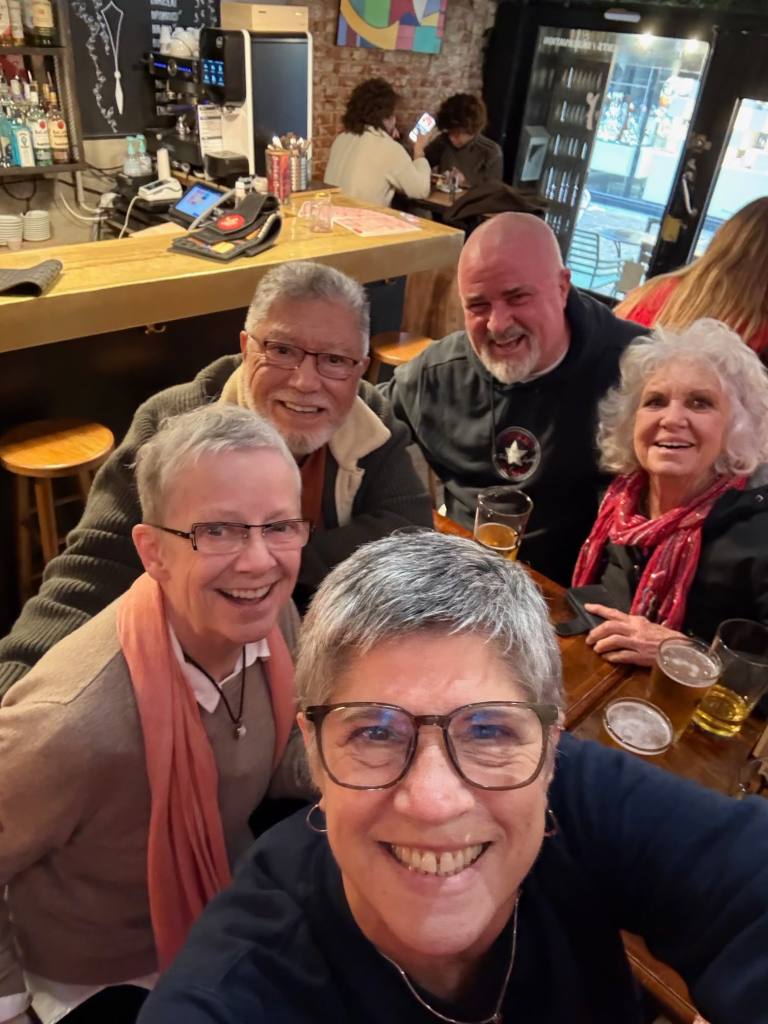
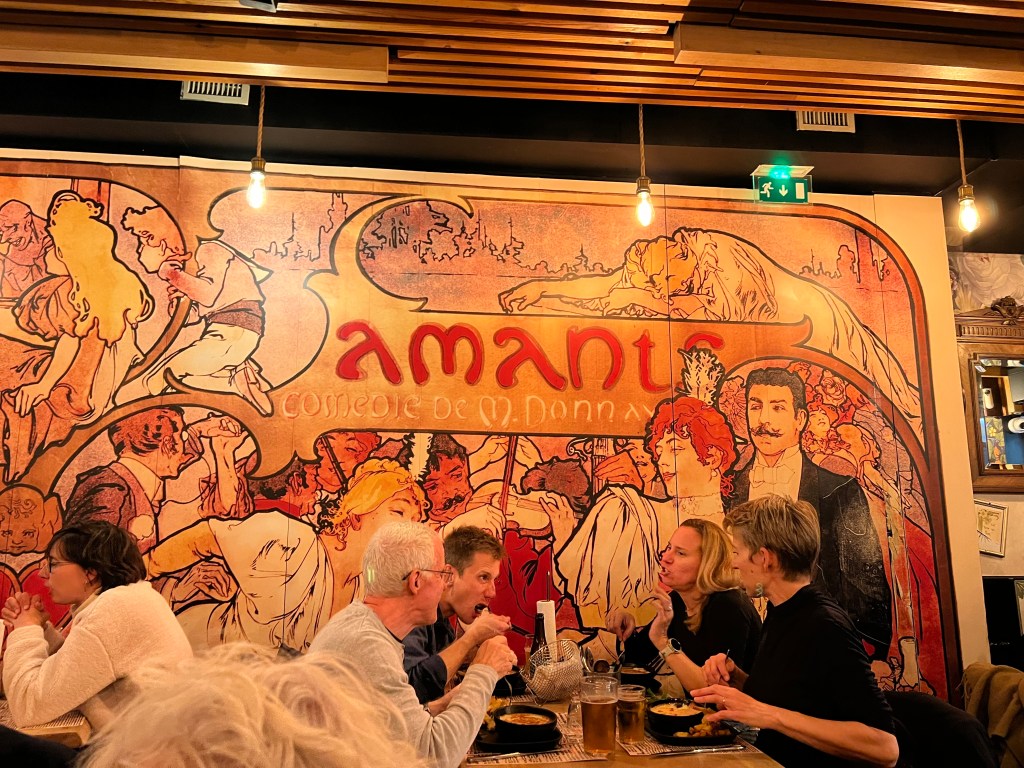
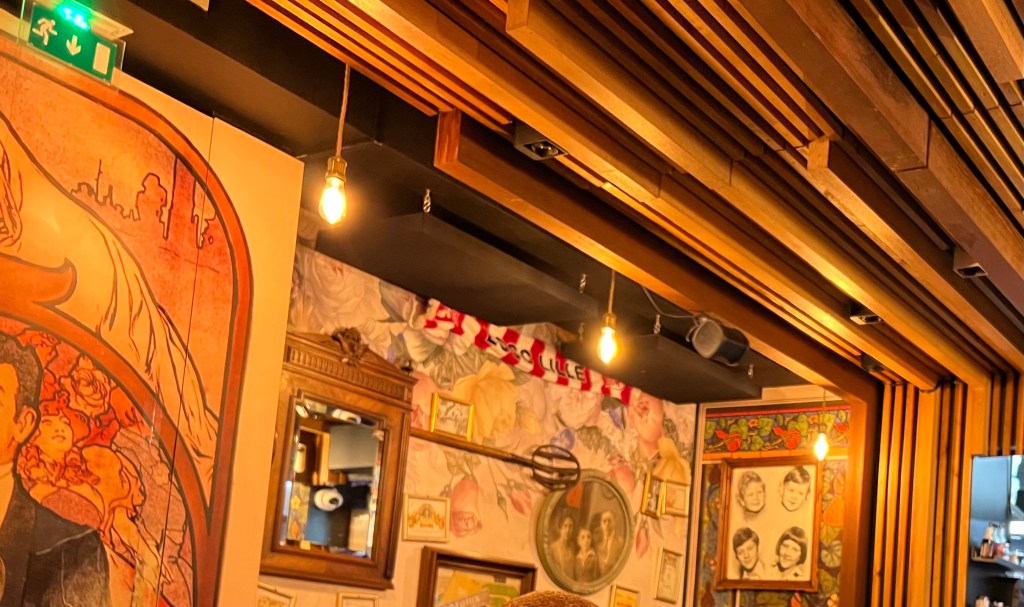
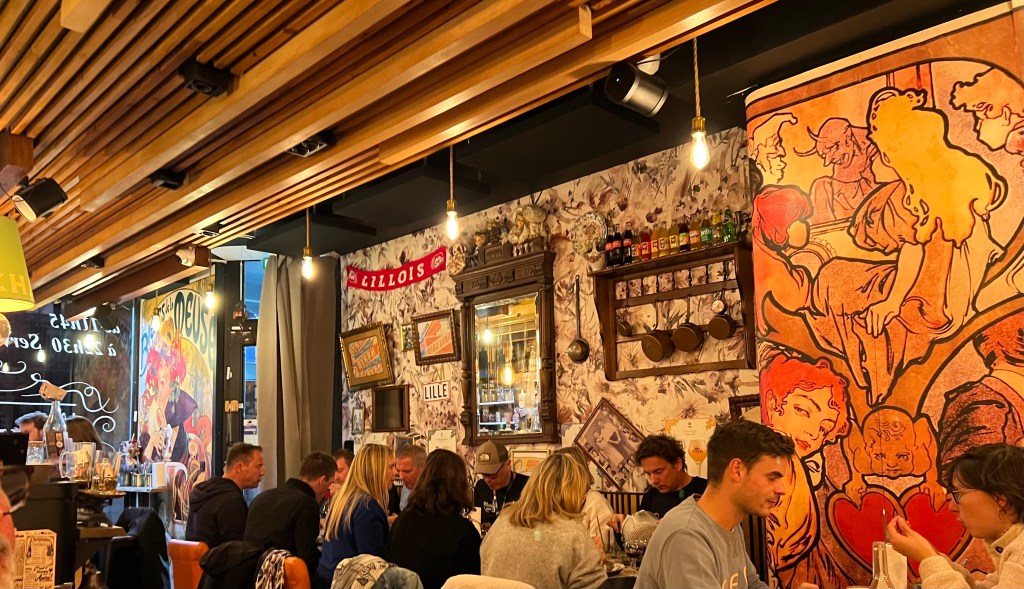
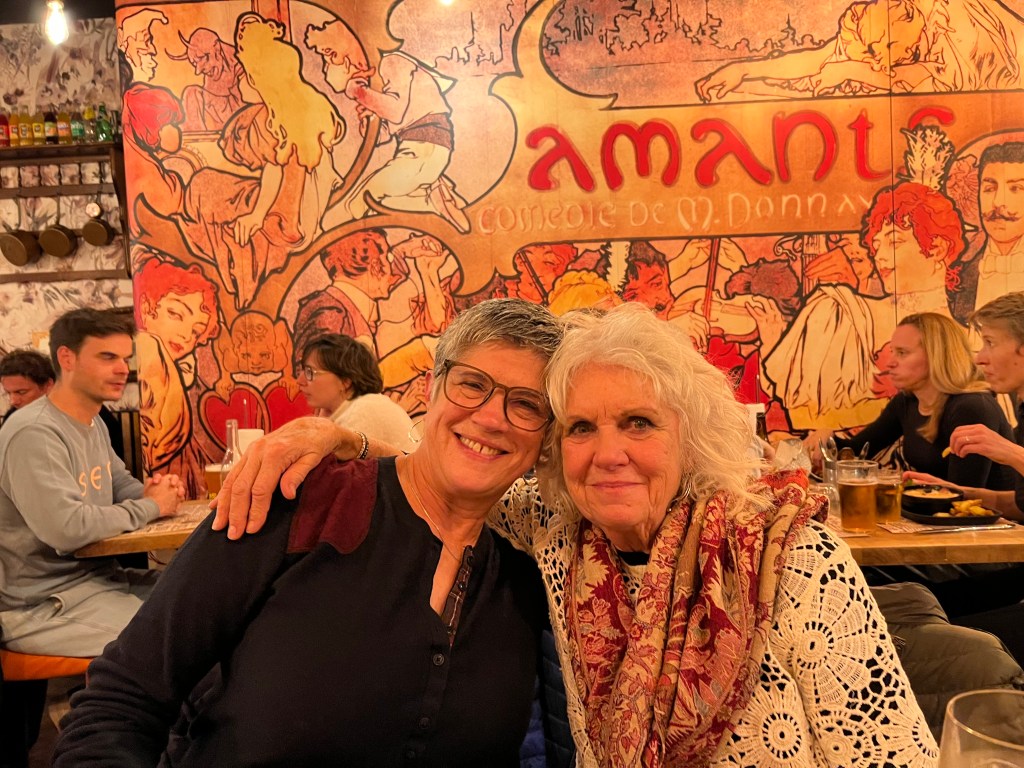
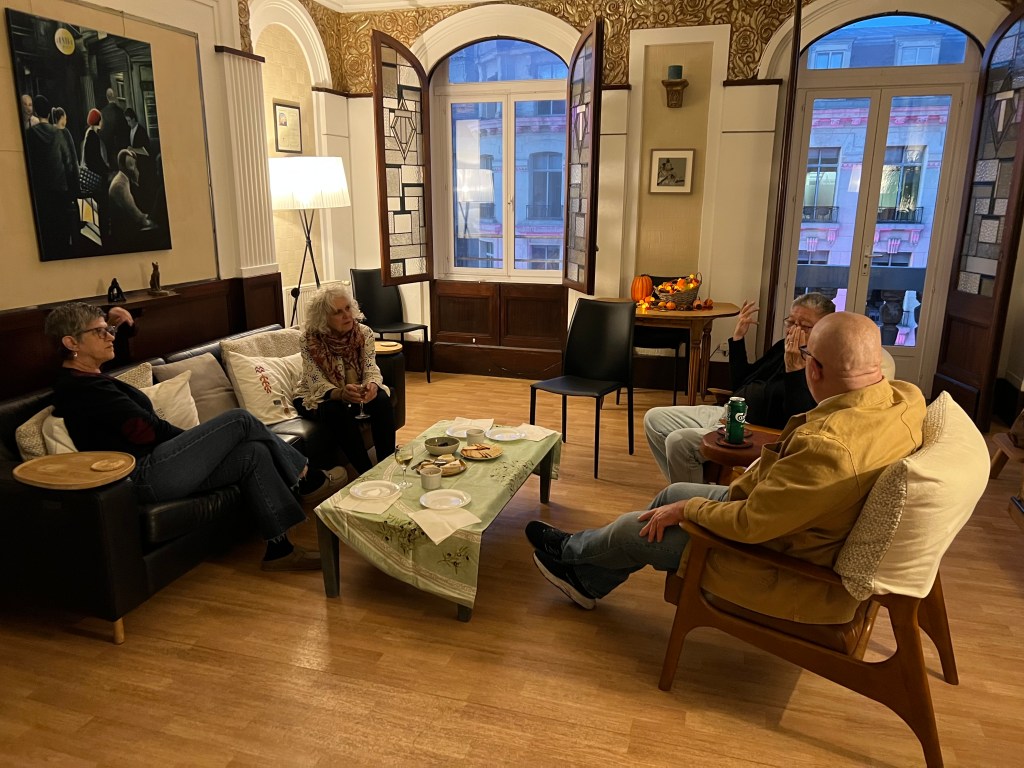
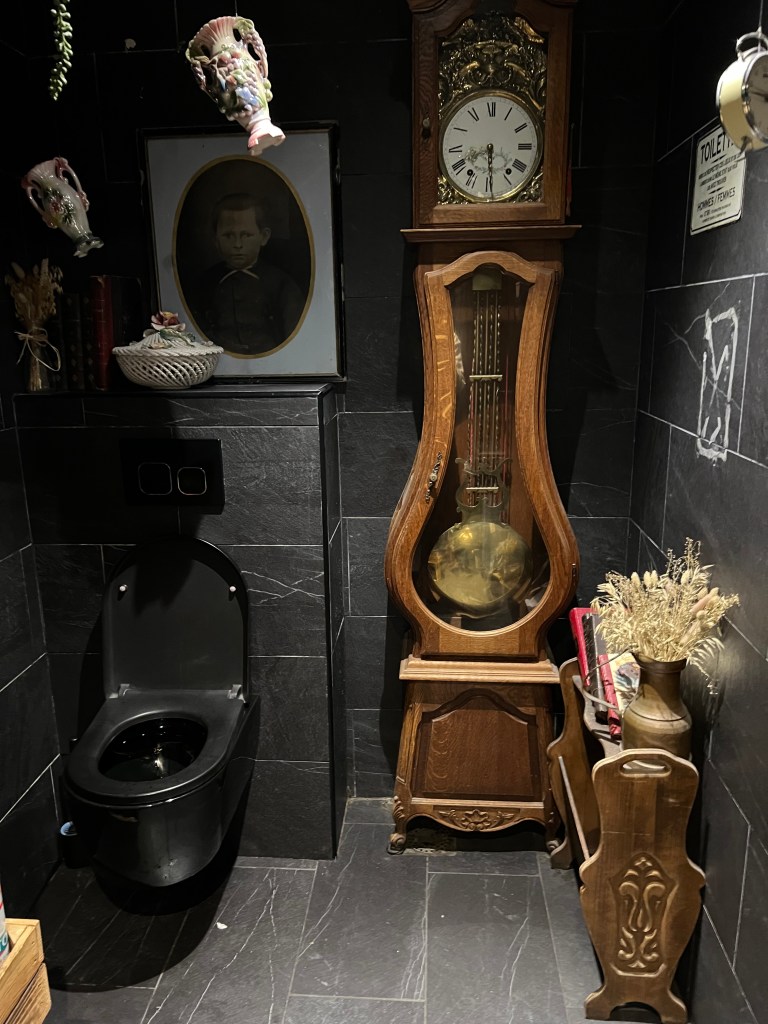
The place was packed with locals and we were treated to great plates of escargot in maroille cheese, carbonade flamande, Pork hock, Risotto conquillettes with ham, Welsh Rarebit with maroille cheese and to finish off, a wonderful Crème Brûlée. The music was all French popular and the locals would burst into song on a few of the pieces. I even heard Yellow Submarine in French – never thought I’d say that much less hear it !! Another fun item was the bathroom. It was hidden behind a mural and very decorated inside. Took a few photos just for this.


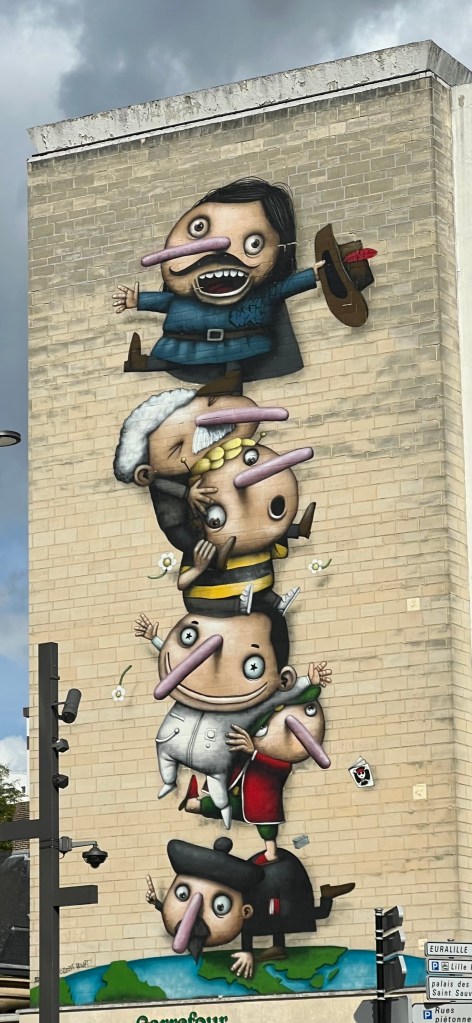
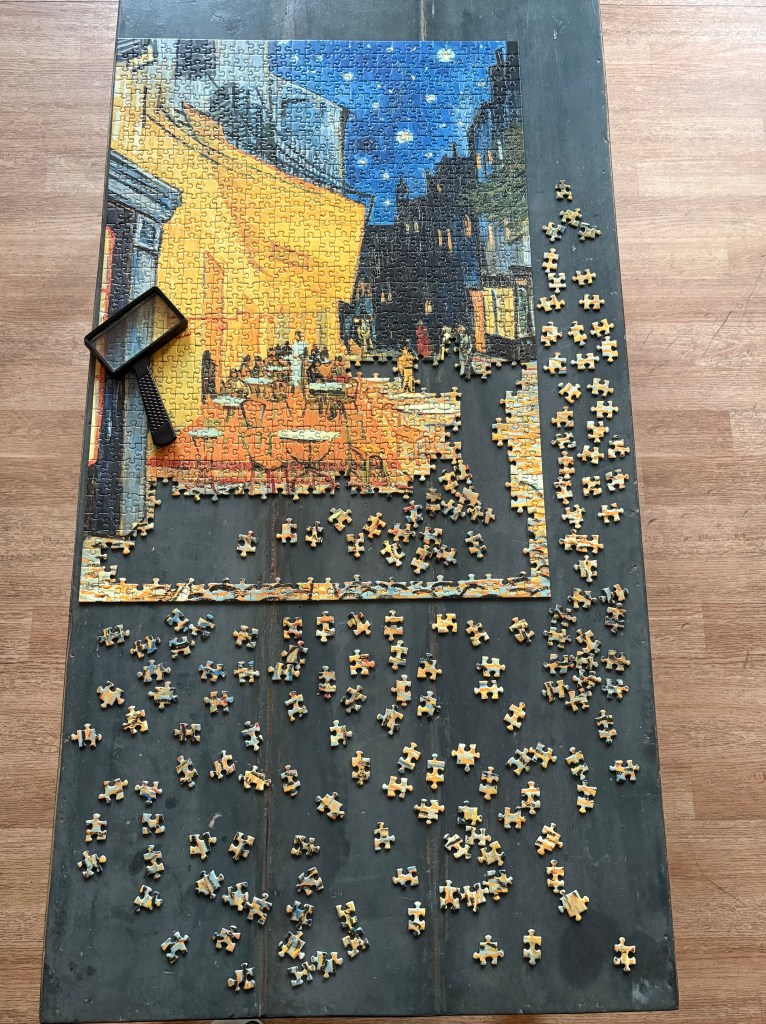
Lastly, as the month came to an end, I decided to throw in a fun shot of a mural in Lille and the latest puzzle we worked on all month. Hope you all had a great October and a Spooky Halloween !


You must be logged in to post a comment.